GPS Shows Male Lions Hunt Hyenas, Not the Other Way Around — Why African Lions Still Own the Savanna
On coverage published Tuesday, September 9, 2026, in Popular Science, ecologist Nancy Barker and colleagues reported GPS-collar results from Etosha, the Linyanti floodplains, and Chobe: spotted hyenas consistently move away from African lions, while male lions tend to move toward hyenas — flipping the old scrap-scavenger story that put hyenas forever trailing lion leftovers. That is the carnivore wire. This post is what that headline sits on: how African lions actually live and hunt as prides, why male and female responses to competitors are not the same commute, and which rumors about lion–hyena “friendship†fail the field. The African Lion Savanna ANIMALS Postcard is one wildlife frame from that story, not a collar map.
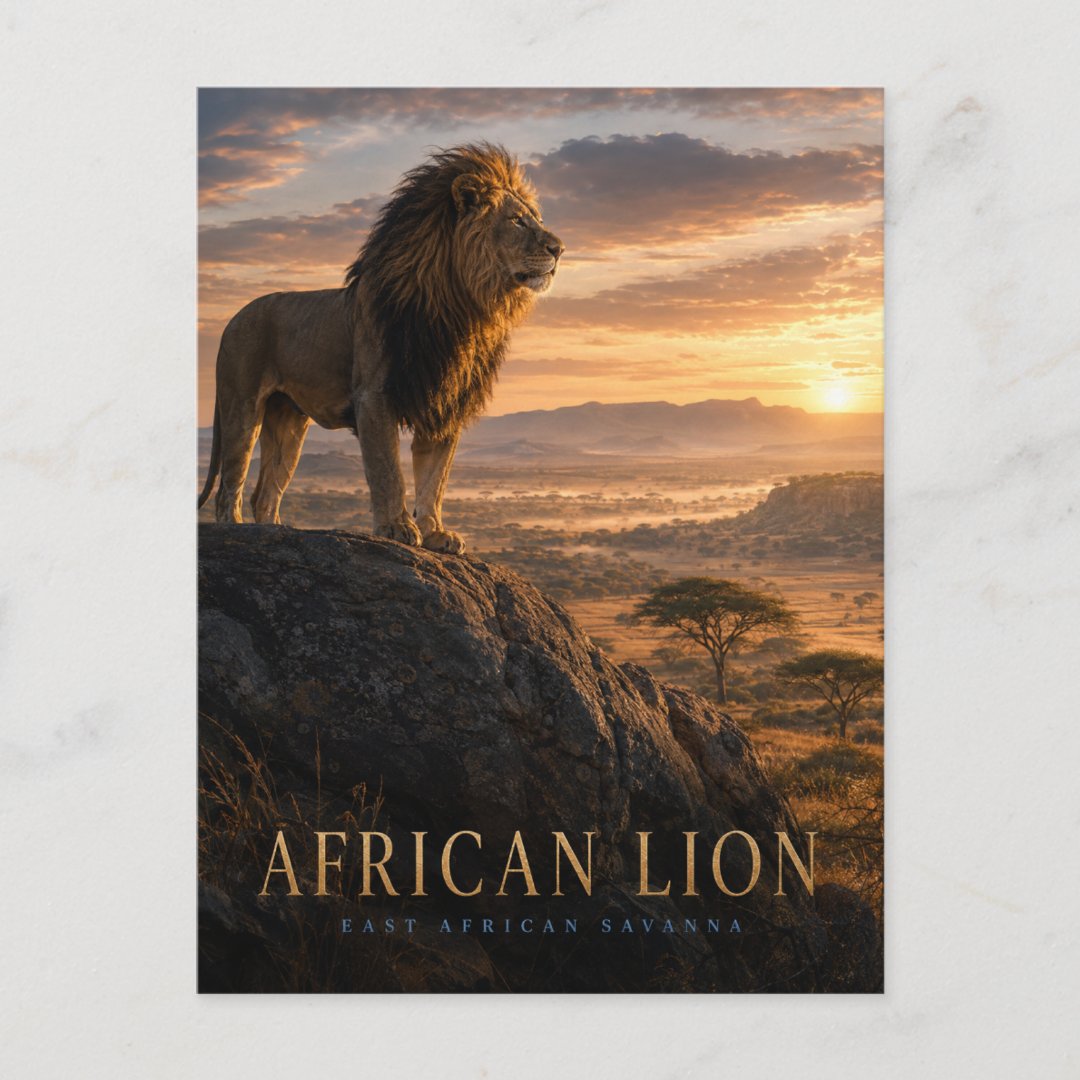
The African lion is not a lone king on a rock
The African lion is Panthera leo, the large social cat of African savanna and open woodland systems: a pride of related females, their cubs, and one or more resident males whose tenure is temporary and contested. Females do most of the cooperative hunting of medium and large ungulates. Males defend tenure, sire litters, and — as Barker’s movement data underline — can press other carnivores hard when space and status are on the line.
People mash “big cat†into one sticker. A pride lioness on a wildebeest chase and a bachelor male testing a hyena clan are related. They are not interchangeable. The postcard is a savanna frame: heat light, grass horizon, a body built for ambush and short power, not a cartoon throne.
Savanna is a job site of prey, shade, and edges
A lion’s workplace is ungulate density within a territory the pride can hold: zebra, wildebeest, buffalo where numbers allow, smaller prey when the big herds move, water points that concentrate both hunters and hunted, and the shade or thicket that hides a day bed. Useful habitat is food plus cover plus room to move without constant livestock collision at the fence line.
A soft edge is open range with depth and wild prey. A hard edge is cattle kraals flush against a pride’s night map. The postcard’s savanna is the soft-edge ideal against which village conflict looks like a hard commute, not a Disney rivalry.
Pride work, male pressure, and hyenas as neighbors
Spotted hyenas are not comic sidekicks. They are heavy, intelligent, clan-living hunters and scavengers that compete for the same carcass economy. The long-standing classroom story said hyenas shadow lions for scraps. Barker’s pairs — seventeen lions and fourteen hyenas over four years, with five-minute GPS snapshots in peak hours — measured something else: hyenas retreat; male lions advance.
Lionesses were less consistent; their reaction depended on which pride-mates were nearby. That is biology, not a morality play. Most hours of a lion year are still rest, scent, failed stalks, cub care, and the quiet politics of who eats first — not a soundtrack fight on a ridge.
How to tell African lion facts from viral cat lore
Prides are female-centered. Related lionesses hold the line on hunting and cub raising. Males come and go through takeover fights. A lone “king†photo is a moment, not the org chart.
Hyenas are competitors, not employees. Clans kill their own prey and contest kills. The new GPS signature does not make them harmless; it revises who initiates the approach.
Tree-climbing is local, not universal. Some populations climb for breeze, prey caches, or escape. Most lions are still ground hunters on open range. Do not caption every viral branch photo as the whole species.
Why that body exists
A leopard voted for solo ambush and vertical escape. A cheetah voted for daylight speed and a lighter frame. An African lion voted for cooperative power, short explosive chases, and a social map that can intimidate other carnivores — including the hyenas that share the night. That is why a collared male pressing a clan and a lioness on a savanna postcard share one job description under different research weather.
Why the ANIMALS postcard looks the way it does
The African Lion Savanna ANIMALS Postcard is built from African lion natural history, not a collar diagram and not a generic “big cat†template. The lion stands in savanna light because that is the job: grass, heat, distance, a body tuned to pride space and ungulate country. A cinematic still is presence and habitat, not a rivalry freeze for its own sake.
If a trip story needs a town name beside the wildlife frame, Supreme Customs keeps destination cards when the postcard should say place instead of predator.
Wild Realms makes cinematic wildlife art from the living world. See nature. Feel connection. Cherish forever.
The postcard: African Lion Savanna ANIMALS Postcard
More lion wildlife: Lion collection


Comments
Post a Comment