A Royal Bengal Tiger Walks Into Alibanda Eco Tourism Centre, Why Soft Edges Still Matter in Tiger Country
A Royal Bengal Tiger Walks Into Alibanda Eco Tourism Centre, Why Soft Edges Still Matter in Tiger Country
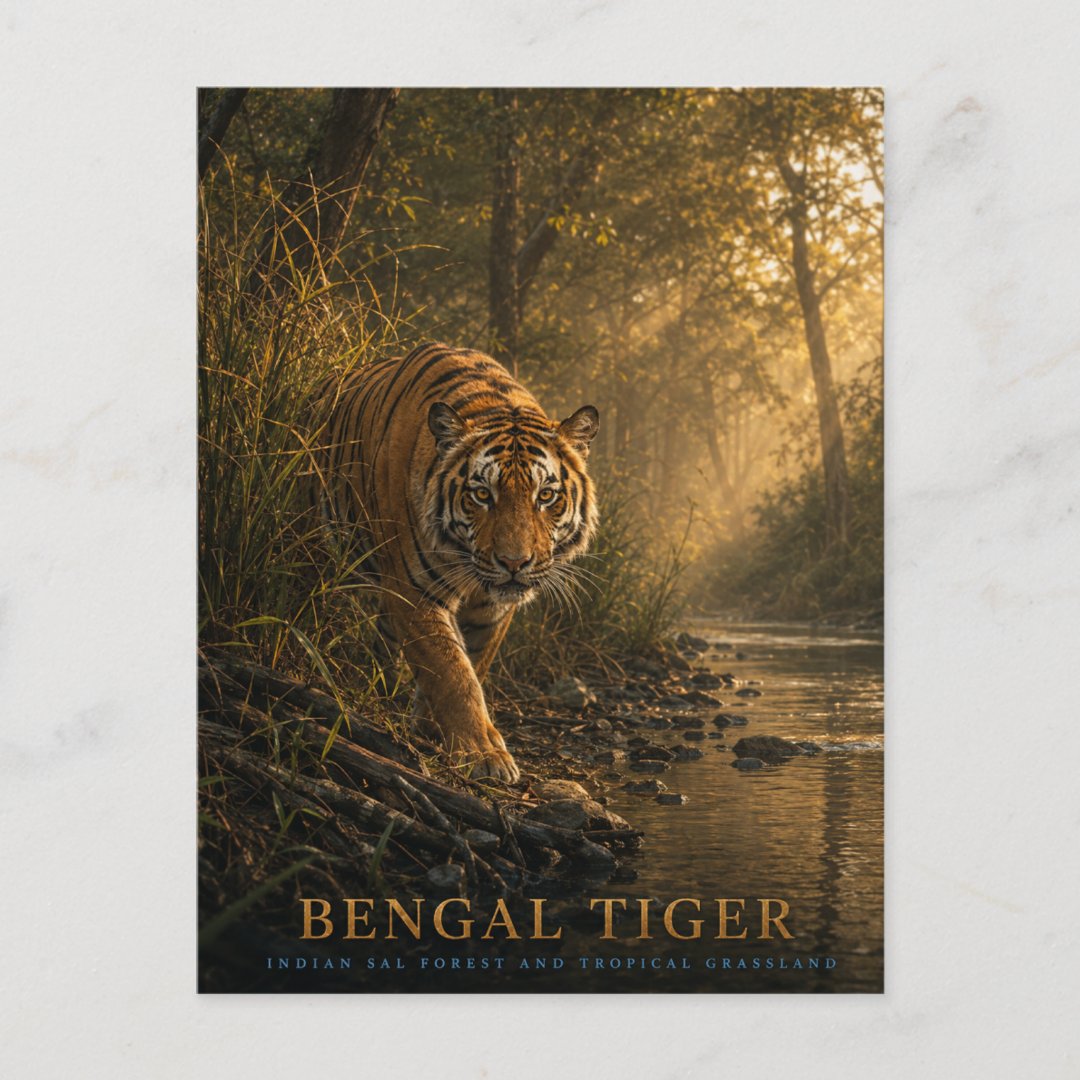
On Wednesday, September 9, 2026, Tob.news reported that a Royal Bengal Tiger slipped through torn nylon netting at Alibanda Eco-Tourism Centre in Sharankhola Range of the East Sundarbans around noon, sent unarmed forest guards scrambling up a watchtower, left fresh footprints in the brush, and by about 5 p.m. had retreated safely into deep forest after a joint search. Assistant range officer Md Khalilur Rahman and WildTeam field staff are in the local wire. That is the headline. This post is what that breach sits on: how Bengal tigers actually use mangrove and forest edge as a job site, why soft fencing and soft corridors matter more than a souvenir roar, and how to read a tiger story without turning it into a zoo meme. The Bengal Tiger Sal Forest ANIMALS Postcard is one wildlife frame from that story, not a Sundarbans incident brief.
The Bengal tiger is not every striped cat on the internet
The Bengal tiger is Panthera tigris tigris, the big striped hunter of the Indian subcontinent’s forests, grasslands, and mangroves, including the Sundarbans where saltwater, mud, and deer trails write a different commute than a dry sal forest. Same species complex people mash into one “tiger” sticker. Different maps. Different risk. Alibanda’s torn fence is a Sundarbans edge story: tourism infrastructure meeting a wild cat that still owns the brush outside the net.
People flatten every tiger clip into the same roar. That is how a Sharankhola watchtower and a postcard of a sal-forest tiger get treated as interchangeable stickers. They are not. Soft edges are the shared lesson. The postcard is a sal-forest frame: stripes in leaf light, a body built for stalk and cover. The news is mangrove politics, nylon net, and a cat that walked back out.
Edges are job sites, not optional scenery
A tiger’s workplace is cover, prey, and a path memory that does not like surprise architecture. Useful habitat is deer and pig within reach of thickets a cat can vanish into. A soft edge is a buffer where tourism fencing, trails, and picnic lines do not sit flush against the corridor with torn net as the only wall. A hard edge is nylon the boars already cut, a watchtower as the only refuge, and a noon breach that turns unarmed guards into spectators.
The Tob.news story is a hard-edge story: wild boars suspected of cutting the net, a tiger using the gap, responders reading footprints when rain and cloud kill visibility. Soft edges elsewhere in tiger country look like maintained corridors, honest fencing, and staff who are not trapped between a guest path and a predator’s commute. The postcard’s forest light is the soft-edge ideal: cover, stripe, and a body that still has room to leave without climbing a tower.
How to tell a Bengal tiger story from a generic big-cat clip
Place first. Sundarbans, Sharankhola, Alibanda, East Bangladesh mangrove: Bengal tiger in a tidal forest complex. Sal forest and dry Indian woodland: still Bengal, different workplace. If the caption only says “tiger” with no map, wait for a better angle.
Body and job. Heavy head, white flashes, stripes that break the outline in leaf and mud. The Alibanda cat was doing edge work, not performing for a guest. A cinematic still of a tiger in forest light is scale and habitat, not a charge freeze for its own sake.
News hygiene. Alibanda, Md Khalilur Rahman, WildTeam, nylon net, watchtower: Sundarbans breach. Sal-forest postcard: forest tiger grammar. Same species awe. Different caption. Soft edges are the shared lesson.
The viral breach versus most of the tiger year
Search results sell the fence, the tower, and the footprint in mud. That is real, and it is a sliver. Most of a tiger’s year is walking, scenting, hunting, and owning cover that never makes a noon tourism wire. Conflict news sells the gap in the net. Most tiger hours after a quiet retreat are still the quiet stalk that put the cat near the centre in the first place.
Why that body exists
A leopard voted for smaller ambush and more tree. A lion voted for open coalition hunting. A Bengal tiger voted for solitary power in cover: stripes as camouflage, mass as takedown, a face that ends arguments with deer and pig. That is why a Sundarbans edge breach and a sal-forest postcard are related frames, and why calling them the same sticker erases the soft-edge lesson the card is meant to hold.
Why the ANIMALS postcard looks the way it does
The Bengal Tiger Sal Forest ANIMALS Postcard is built from Bengal tiger natural history, not an Alibanda incident diagram. The tiger stands in forest light because that is the job: stripes in cover, a body that edits prey routes when the edge is soft enough to live in. Keep the Sharankhola breach in the caption where it belongs. Keep the forest frame honest about which tiger workplace it shows.
If you want a quieter marine cousin of today’s edge theme, Wild Realms’ wildlife store sits next to destination cards on Supreme Customs when a trip story needs a place instead of a predator.

Wild Realms makes cinematic wildlife art from the living world. See nature. Feel connection. Cherish forever.
The postcard: Bengal Tiger Sal Forest ANIMALS Postcard
More tiger wildlife: Tiger collection


Comments
Post a Comment