Alaska Wolves Are Eating Sea Otters, The Kelp Forest Prey Switch Behind Record Mercury
Alaska Wolves Are Eating Sea Otters, The Kelp Forest Prey Switch Behind Record Mercury
Researchers tracking coastal wolves in southeast Alaska — including the Pleasant Island pack and sites near Gustavus, Glacier Bay, and Prince of Wales Island — have documented a prey switch from deer toward sea otters, with one study period on the Gustavus coast logging 31 otter kills and newer September 2026 updates tying that marine diet to mercury loads up to 278 times higher than Interior Alaska wolves. The wire is wolves hunting the nearshore. This post is what that headline sits on: why a sea otter is a kelp-forest keystone, how its fur and foraging work, why river otter and sea otter are not interchangeable, and what a Pacific shoreline becomes when otters are present versus absent. The Sea Otter Kelp Forest ANIMALS Postcard is one wildlife frame from that story, not a wolf diet chart.
The sea otter is not a river otter with better PR
The sea otter is Enhydra lutris, a marine mustelid of the North Pacific. The North American river otter is Lontra canadensis, a freshwater and nearshore traveler that can use coasts but is built for rivers, lakes, and marshes. People mash them into one “otter” meme. They are not the same job.
Sea otters are heavier in the water, denser-furred, and tied to kelp forests, rocky reefs, and soft bottoms where urchins, crabs, clams, and snails are the paycheck. They rarely leave the ocean for long. River otters commute along banks and can look like a sea otter at a glance in a bad photo. The Alaska wolf story is specifically about sea otters as marine prey — the same animals whose recovery rebuilt kelp on many Pacific stretches. If a headline only says “otters,” ask which ocean and which genus before you share it.
Kelp forest is a job site, not a green backdrop
A sea otter’s workplace is cold nearshore mosaic: canopy kelp, understory algae, rocky cracks, soft sediment. Urchins graze kelp. Otters eat urchins (and much else). More otters often mean fewer urchin barrens, more standing kelp, different fish assemblages, and a shoreline that buffers weather differently. Kelp is nursery habitat, wave buffer, and carbon fixer while it stands. The otter is one visible hinge in that chain.
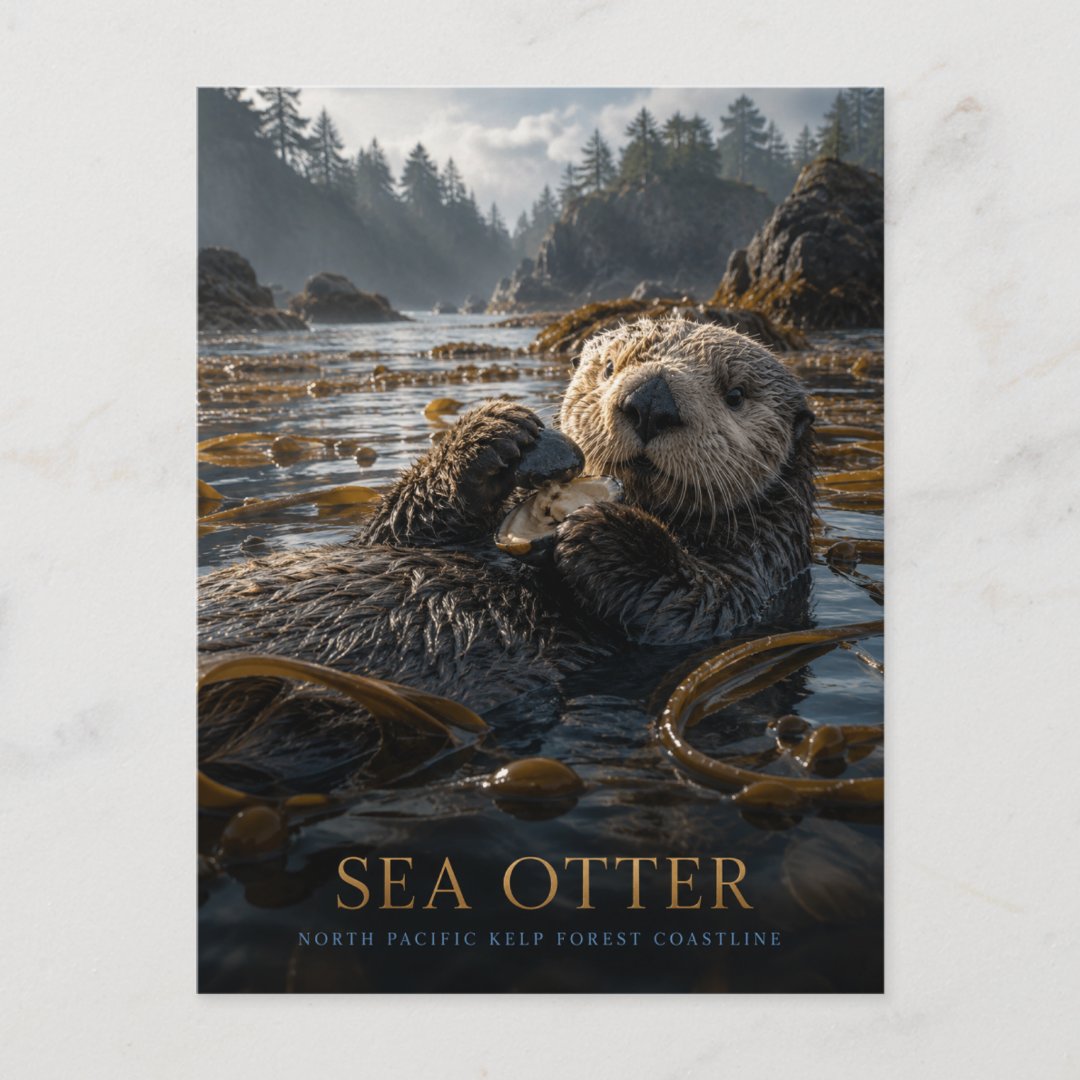
The postcard pairing of a sea otter in kelp is that map: animal in the canopy workplace, light through water, not a soft-focus mascot. When coastal wolves start treating recovered otter numbers as a protein option after deer crash — the Pleasant Island pattern after 2013 — the land food web is borrowing from the marine one. Mercury follows that borrow because methylmercury builds in aquatic food webs; wolves that specialize on marine mammals carry loads closer to polar-bear territory than to Interior deer-eaters.
Fur, tools, and why the float is not the whole day
Sea otters have the densest fur of any mammal and little blubber. The coat is insulation. Grooming is survival, not vanity. A dirty coat is a cold death. They forage with dives, often bring prey to the surface, and are famous for using rocks as tools on hard-shelled food. That toolkit is why a floating otter with a rock on its belly is the viral second — and why most of the day is still dive, eat, groom, hold space in water cold enough to punish a bad coat.
Wolves hunting them are not swimming like seals. Coastal packs work the intertidal and haul-out edges where otters are vulnerable. Trail cameras and stable isotopes are how researchers turn anecdote into diet fractions. The educational point for a wildlife reader is not “wolves are villains.” It is that sea otter recovery changed what was available on the beach, and contaminants rode along.
How to tell a sea otter from a river otter (and from a seal)
Place and posture. A sea otter spends most of its life in salt water, often floating on its back. A river otter is more elongated on land, a bank specialist that can visit coasts. A harbor seal is a pinniped with flippers, not a mustelid with paws.
Face and fur. Sea otters have a blunt, whiskered face and a coat that looks plush even when wet. River otters look sleeker and more “weasel-long.”
Size and tail. Sea otters are stockier; the tail is shorter relative to the body than a river otter’s rudder. If the animal is cracking a clam on its belly in a kelp bed, you are not looking at a river otter.
News hygiene. Alaska wolf–otter papers are about Enhydra. Seoul’s Han River eDNA stories are about river otters. Same family lesson about predators and habitat. Different water.
The viral float versus most of the Pacific day
Search results sell the float, the rock, the face. Most of a sea otter’s day is foraging dives, grooming, and territory in cold water. The wolf headline sells “land predator eats marine mascot.” Most of a coastal wolf’s week may still be deer, moose, or scrap when those exist — the Pleasant Island and Gustavus numbers matter because they show a real specialization, not a cartoon.
Pups ride on mothers. Rafts of otters are social and practical. The keystone story is population-level: enough otters, fewer urchin barrens. The mercury story is also population-level: enough marine prey in the wolf diet, enough MeHg in wolf tissue to worry reproduction and health. Both are true without turning either animal into a villain sticker.
Range, recovery, and why the shoreline is politics
Sea otters were hunted to near wipeout for the fur trade, then protected and reintroduced across parts of the North Pacific. Recovery is uneven. Where they return, kelp ecology often shifts. Where wolves and people share the same coast, a recovered otter population becomes someone’s prey, someone’s tourist draw, and someone’s contaminant pathway.
That is why a still sea otter in kelp is not a small subject. The canopy is a workplace in a food web that now includes GPS-collared wolves. The September research refresh is a civic clock on that web; the biology is why the clock matters.
Why that body exists
A seal voted for blubber and dive time. A river otter voted for bank speed and freshwater fish. A sea otter voted for extreme fur, surface handling of hard prey, and a life spent in the kelp restaurant. Retractable movie charm is not the story. Thermoregulation and foraging are. That is also why an otter in a dirty coat, or a wolf packing marine mercury, is an animal caught in geometry and chemistry, not in a children’s book moral.
Why the ANIMALS postcard looks the way it does
The Sea Otter Kelp Forest ANIMALS Postcard is a Pacific frame: animal in the kelp workplace, light and water as the medium of the job, not a wolf-kill diagram and not a river portrait. It exists so the educational story has one honest image of the marine keystone — while the Alaska wolf news remains a coastal predation and contaminant story that still has to name the right otter.
The type on the card says SEA OTTER and KELP FOREST because that is the species and the job site. Wildlife first. Place as the medium it lives in. That is the ANIMALS line: a cinematic still of a real animal in a real kind of cold green water, meant to be kept, not a stack of SKUs.
Wild Realms makes cinematic wildlife art from the living world. See nature. Feel connection. Cherish forever.
The postcard: Sea Otter Kelp Forest ANIMALS Postcard
More otter wildlife: Otter collection


Comments
Post a Comment