Assam Forest Team Removes a Tractor Tyre From a Wild Elephant’s Neck, Why African and Asian Elephants Are Different Jobs
Assam Forest Team Removes a Tractor Tyre From a Wild Elephant’s Neck, Why African and Asian Elephants Are Different Jobs
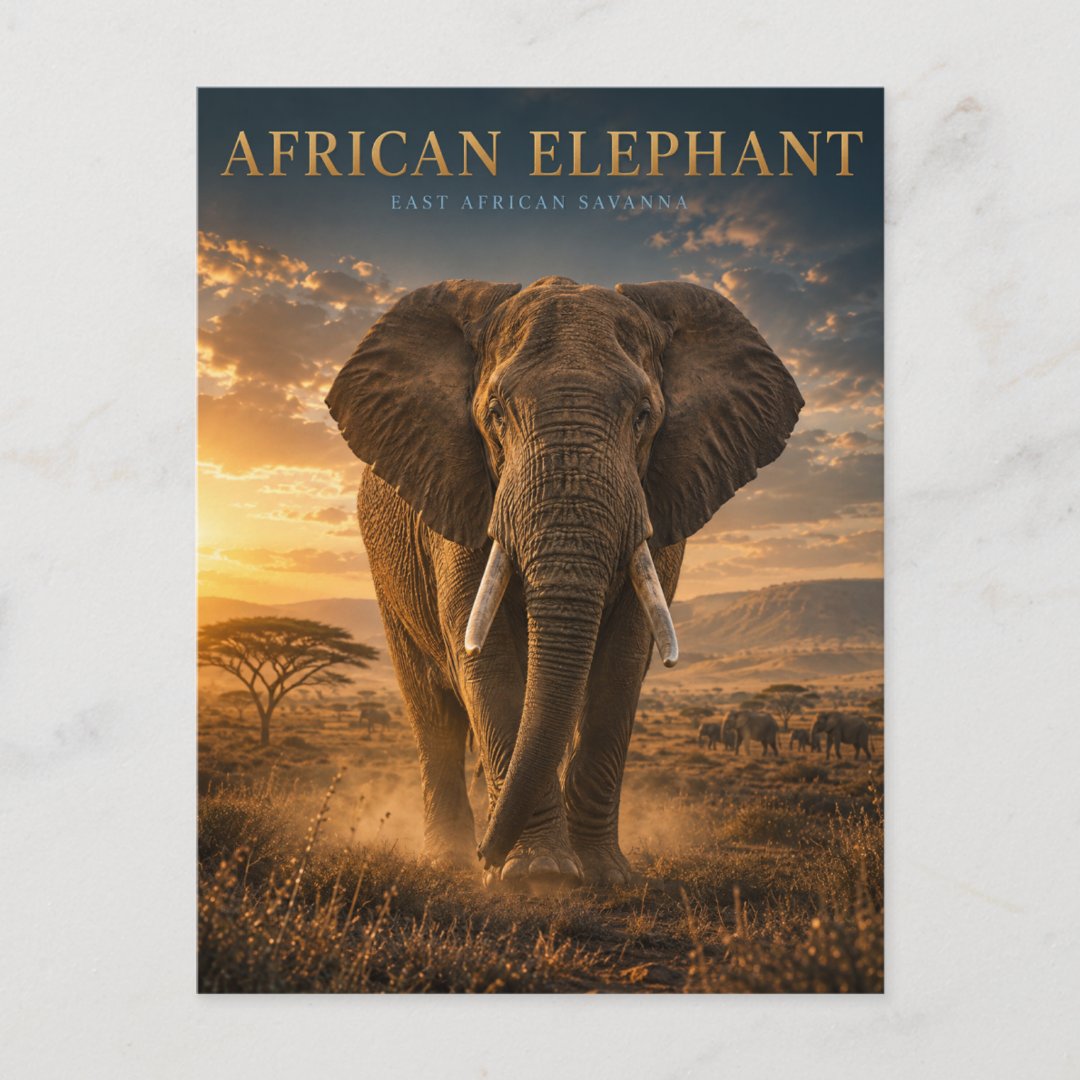
On coverage published Friday, September 11, 2026, in News9live, Assam Forest Department crews freed a wild male elephant in Golaghat district after a heavy tractor tyre lodged tightly around its neck near the Bakial forest block of Morongi and Numaligarh — spotted in distress near human settlements, immobilized with care under Assistant Conservator of Forests Sandeep’s team, tyre removed, animal held briefly under observation before rejoining its herd. That is the wire: an Asian elephant rescue on a farm-and-forest edge. This post is what that headline sits on for a reader who mostly sees “elephants” as one gray logo: how African bush elephants actually live, feed, and reshape a savanna, and why Asian and African elephants are different jobs in the same order of giants. The African Elephant Savanna ANIMALS Postcard is one wildlife frame from that story, not a Golaghat tyre brief.
The African elephant is not every elephant on the planet
The African bush elephant is Loxodonta africana, the big open-country and woodland giant of sub-Saharan Africa: larger ears that map roughly like the continent, both sexes often with visible tusks, a head that carries a single high dome in profile compared with the twin-domed Asian skull. The Asian elephant is Elephas maximus, the forest and mosaic giant of South and Southeast Asia, including Assam herds that move through tea, settlement, and forest fringe. Same order, Proboscidea. Different genus. Different job.
People mash them into one “elephant” meme. That is how a neck-tyre rescue on an Asian farm edge and a Serengeti dust-bath photo get treated as interchangeable stickers. They are not. The postcard is an African savanna frame: ears, tusks, and light that belong to African bush elephant country.
Asian versus African: same order, different job notes
Ears. African bush elephants have large ears shaped roughly like Africa. Asian elephants have smaller, more rounded ears. In a clear photo, ears are one of the fastest tells.
Head and back. Asian elephants show a twin-domed head and a different back line than the African’s single-domed forehead and classic plains silhouette. African bush elephants often look higher at the shoulder in open light.
Tusks and trunk tip. In African bush elephants, both sexes commonly carry tusks. In Asian elephants, heavy tusks are mostly a male story; many females show only tushes or none. African trunks end in two “fingers”; Asian trunks end in one. Place maps diverge too: Asian farm-edge corridors versus African savanna, woodland, and waterhole politics.
Savanna and woodland are job sites, not backdrops
An African elephant’s workplace is browse and graze at landscape scale: acacia and mopane, grasses after rain, bark when protein is scarce, waterholes as social theaters. Useful habitat is food, water, and room on ancestral paths. A dust wallow is skin care. A broken tree is engineering that opens light for other species. Dust, grass, and horizon are the other characters — they set the commute the postcard holds.
Asian elephants run the same social software against denser forest mosaic, tea estates, roads, and discarded hardware that can become a slow trap. Both are landscape animals. Only one is African bush biology. Bulk feeding, molar conveyors, ear radiators, and a trunk that smells and dusts make the day a commute, not a charge.
How to tell an African bush elephant from an Asian elephant
Ears and head first. Big Africa-shaped ears and a single high forehead profile: African bush. Smaller ears and twin domes: Asian. If the clip is only a gray shoulder in brush, wait for a better angle before you caption a continent.
Tusks and sex. Visible tusks on a female are common in African bush elephants and uncommon as big ivory in Asian cows. Do not invent a “bull” from a single tip in grass.
Third story. Forest elephants of Africa are smaller, denser-forest specialists. This postcard is bush/savanna, not forest elephant, and not Asian farm-edge mosaic.
Why that body exists
A rhino voted for bulk and a different face. A hippo voted for water and night grazing. An African bush elephant voted for height, trunk reach, ear radiators, and tusks as landscape tools in open and semi-open country. An Asian elephant voted for a twin-domed skull and a body tuned to forest mosaic and farm-edge corridors. That is why the two giants are related — and why calling them the same sticker erases the lesson the postcard is meant to hold.
Why the ANIMALS postcard looks the way it does
The African Elephant Savanna ANIMALS Postcard is built from African bush natural history, not a rescue diagram and not a generic “gray giant” template. The elephant stands in savanna light because that is the African job: ears as flags, dust as medium, a body that edits trees and grass. A cinematic still is scale, not a charge freeze for its own sake. Keep the Asian Assam news in the caption. Keep the savanna frame honest about which elephant job it shows.
Wild Realms makes cinematic wildlife art from the living world. See nature. Feel connection. Cherish forever.
The postcard: African Elephant Savanna ANIMALS Postcard
More elephant wildlife: Elephant collection


Comments
Post a Comment