Coimbatore Foresters Free a Snared Wild Elephant, Why Asian and African Elephants Are Different Jobs
Coimbatore Foresters Free a Snared Wild Elephant, Why Asian and African Elephants Are Different Jobs
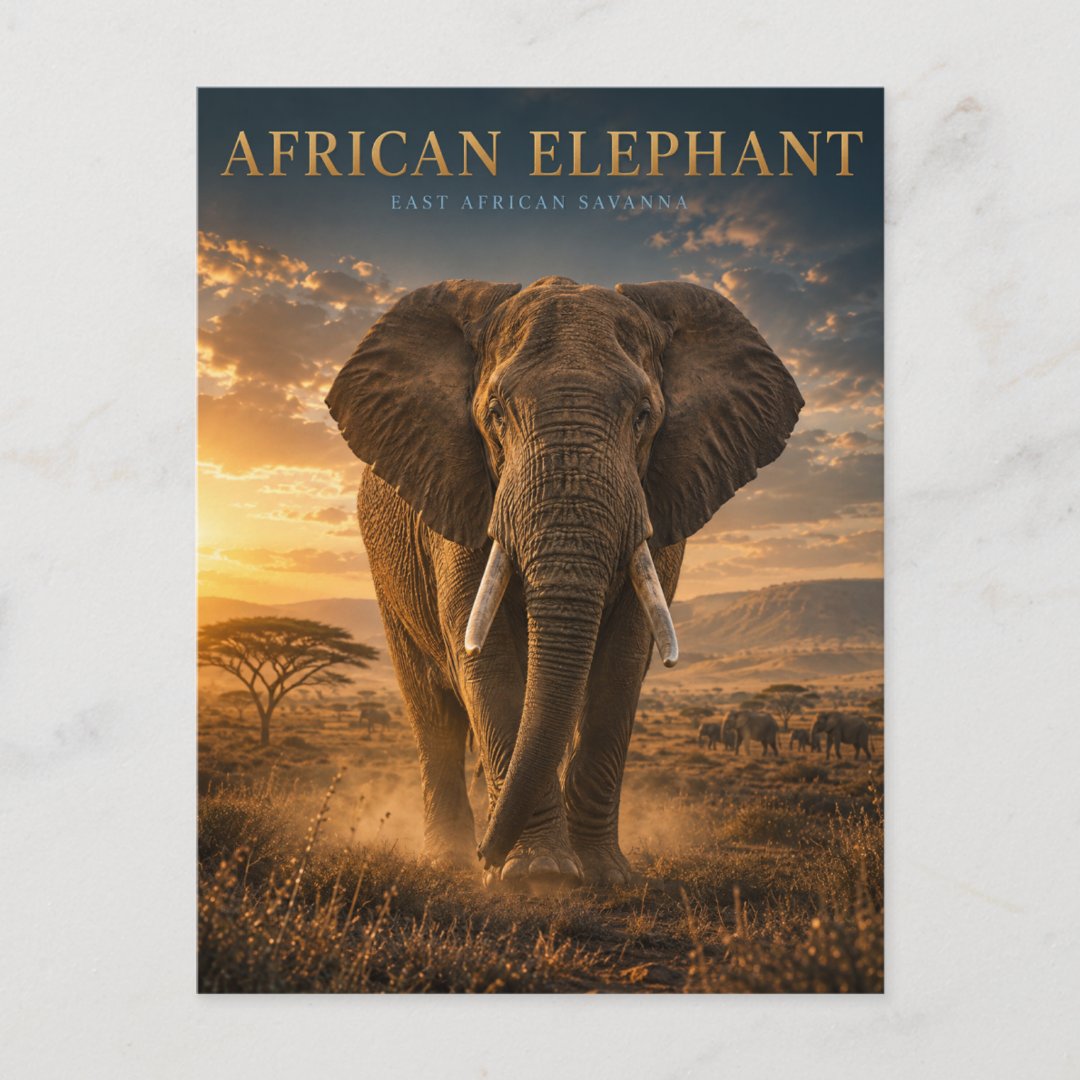
On Sunday, September 7, 2026, forest staff in Tamil Nadu’s Coimbatore district tranquillised, treated, and released a female wild elephant that had carried an iron wire snare on her front left leg since she was spotted on September 2 in the Uliyur beat near Pethikuttai, inside the Sirumugai range of the Nilgiri Eastern Slope Reserve Forest. About sixty forest personnel worked the operation with veterinarians from the Anamalai and Sathyamangalam tiger reserves and drones for tracking. That is the wire: an Asian elephant rescue on the Western Ghats fringe. This post is what that headline sits on for a reader who mostly sees “elephants” as one gray logo: how African bush elephants actually live, feed, and reshape a savanna, and why Asian and African elephants are different jobs in the same order of giants. The African Elephant Savanna ANIMALS Postcard is one wildlife frame from that story, not a snare-removal brief.
The African elephant is not every elephant on the planet
The African bush elephant is Loxodonta africana, the big open-country and woodland giant of sub-Saharan Africa: larger ears that map roughly like the continent, both sexes often with visible tusks, a head that looks as if it carries a single high dome in profile compared with the twin-domed Asian skull. The Asian elephant is Elephas maximus, the forest and mosaic giant of South and Southeast Asia, including the Western Ghats herds that move through Coimbatore’s reserve forests. Same order, Proboscidea. Different genus. Different job.
People mash them into one “elephant” meme. That is how a Sirumugai snare rescue and a Serengeti dust-bath photo get treated as interchangeable stickers. They are not. The Coimbatore female is Asian, in a snare-and-conflict landscape. The postcard is an African savanna frame: ears, tusks, and light that belong to African bush elephant country. Same hygiene as telling a sea otter from a river otter before you share a headline.
Asian versus African: same order, different job notes
Ears. African bush elephants have large ears shaped roughly like Africa. Asian elephants have smaller, more rounded ears. In a clear photo, ears are one of the fastest tells.
Head and back. Asian elephants show a twin-domed head and a back that often looks more arched or level in a different way than the African’s single-domed forehead and concave-backed silhouette. African bush elephants look “higher at the shoulder” in many classic plains photos.
Tusks. In African bush elephants, both males and females commonly carry tusks (with local exceptions). In Asian elephants, heavy tusks are mostly a male story; many females have small tusks (tushes) or none visible. A snared cow in Tamil Nadu is not the same visual as a big-tusked African matriarch in dust.
Trunk tip. African elephants have two “fingers” at the trunk tip. Asian elephants have one. That detail is hard in a drone still and easy in a zoo or postcard close look.
Place and conflict. Asian: Western Ghats, Nilgiris, farm edges, tea and forest mosaic, snare and train and fence politics. African: savanna, woodland, floodplain, ivory and fencing and waterhole politics. Same intelligence and social depth. Different maps.
Savanna and woodland are job sites, not backdrops
An African elephant’s workplace is browse and graze at landscape scale: acacia and mopane, grasses after rain, bark when protein is scarce, waterholes as social theaters. Useful habitat is food, water, and room on ancestral paths. A dust wallow is skin care. A broken tree is engineering that opens light for other species.
The postcard pairing is that map: body as keystone, ears as radiators, tusks as tools. When an Asian elephant carries a wire snare through Sirumugai for days, the job site is denser forest edge, farm beats, and sixty staff with borrowed tiger-reserve vets. Both stories are landscape animals. Only one is African bush biology.
Teeth, trunk, and why the day is a commute
Elephants are bulk feeders on nearly constant intake: grasses, leaves, bark, fruit. Molars replace in a conveyor through life; when the last set wears out, old elephants starve. The trunk smells, touches, drinks, dusts, and plucks. Tusks are modified incisors for dig, debark, and fight.
Heat management is half the African day. Large ears flush blood; mud and dust are sunscreen. The picture is a long commute between water, forage, and shade, not one dramatic charge. A snare on a front leg turns that commute into a wound. Coimbatore’s operation existed because wire is a slow sentence; the same limb geometry makes snares lethal on either continent.
How to tell an African bush elephant from an Asian elephant (and from a mammoth cartoon)
Ears and head first. Big Africa-shaped ears and a single high forehead profile: African bush. Smaller ears and twin domes: Asian. If the clip is only a gray shoulder in brush, wait for a better angle before you caption a continent.
Tusks and sex. Visible tusks on a female are common in African bush elephants and uncommon as big ivory in Asian cows. Do not invent a “bull” from a single tusk tip in grass.
Skin and silhouette. African bush elephants often look more wrinkled and angular in classic plains light. Asian elephants can look fuller-bodied with a different back line. Forest elephants of Africa are a third story: smaller, straighter tusks, denser Central African forest. This postcard is bush/savanna, not forest elephant.
News hygiene. Coimbatore, Sirumugai, Nilgiri Eastern Slope, Uliyur beat: Asian elephant. African savanna postcard and Serengeti-style dust: African bush elephant. Same awe. Different caption.
The viral charge versus most of the day
Search results sell the charge, the trumpet, the calf under the belly. That is real, and it is a sliver. Most of an elephant’s day is walking, feeding, touching, and teaching calves the map. Matriarchs hold decades of route memory. Musth is a season, not a permanent mood.
Rescue news sells the dart and the cheer when she stands. Most of her life after release is still the commute that put her in Uliyur. Snare stories are civic. Most elephant hours are quiet bulk feeding. Hold both truths so neither continent becomes one cartoon.
Herds, matriarchs, and why the path is a property line
African bush elephants live in fission-fusion societies around related females. Males leave and form loose associations. Infrasound and scent carry farther than a tourist can hear. The savanna in the postcard is a property of memory: who leads to water in drought, which fence is deadly, which corridor still connects.
Asian herds in the Western Ghats run the same social software against farms, roads, and wire. Coimbatore’s drones and tiger-reserve vets intervene so the matriarchal commute can continue. African conservation fights ivory, fencing, and habitat shredding on a wider stage. Both are about keeping the path alive.
Why that body exists
A rhino voted for bulk and a different face. A hippo voted for water and night grazing. An African bush elephant voted for height, trunk reach, ear radiators, and tusks as landscape tools in open and semi-open country. An Asian elephant voted for a twin-domed skull and a body tuned to forest mosaic and farm-edge corridors. That is why a snared cow in Sirumugai and a tusked bull in African dust are related giants, and why calling them the same sticker erases the lesson the postcard is meant to hold.
Why the ANIMALS postcard looks the way it does
The African Elephant Savanna ANIMALS Postcard is built from African bush natural history, not a Western Ghats rescue diagram and not a generic “gray giant” template. The elephant stands in savanna light because that is the African job: ears as flags, dust as medium, a body that edits trees and grass. A cinematic still is scale, not a charge freeze for its own sake.
The type on the card says AFRICAN ELEPHANT and SAVANNA because that is the species and the job site. Wildlife first. Place as the medium it lives in. That is the ANIMALS line: a cinematic still meant to be kept, not a stack of SKUs. Keep the Coimbatore Asian snare news in the caption. Keep the savanna frame honest about which elephant job it shows.
Wild Realms makes cinematic wildlife art from the living world. See nature. Feel connection. Cherish forever.
The postcard: African Elephant Savanna ANIMALS Postcard
More elephant wildlife: Elephant collection


Comments
Post a Comment