Colorado Parks and Wildlife Kills Two Wolves After Copper Creek and Three Creeks Livestock Attacks, What Gray Wolves Are Built For
Colorado Parks and Wildlife Kills Two Wolves After Copper Creek and Three Creeks Livestock Attacks, What Gray Wolves Are Built For
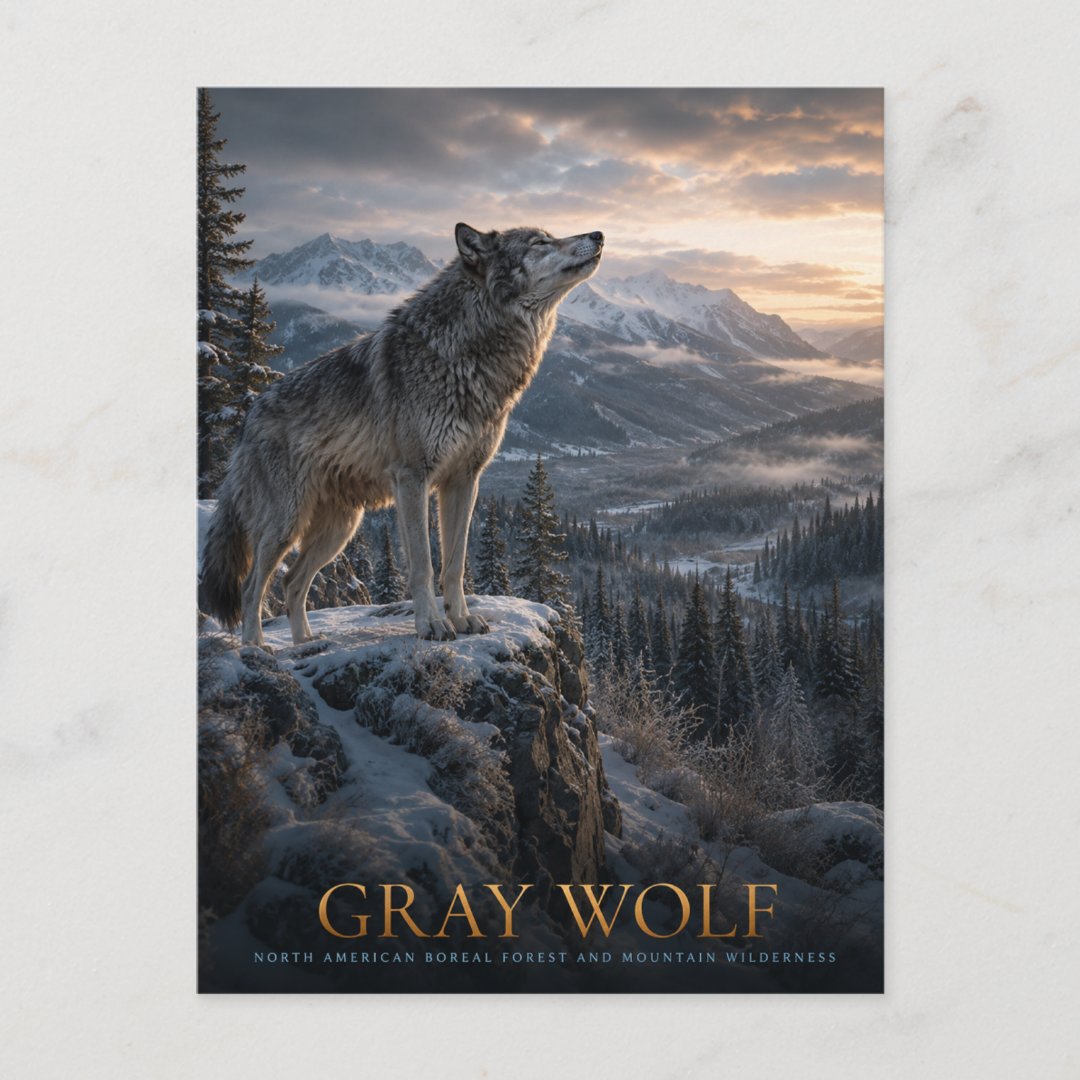
On coverage published Monday, September 8, 2026, in the Vail Daily and from Colorado Parks and Wildlife, agency staff killed one male yearling from the Copper Creek Pack in Pitkin County after four cattle attacks and one male yearling from the Three Creeks Pack in Rio Blanco County after sheep attacks — the fourth lethal removal this summer and the fifth since Colorado’s 2023 gray wolf reintroduction. That is the wire: livestock conflict management in the Rockies where packs, pastures, and Proposition 114 politics share the same map. This post is what that headline sits on: what gray wolves are actually built for, how pack hunting and territory work, and why a lethal-removal count is a symptom of edge friction rather than a full natural-history lesson. The Gray Wolf Mountain Wilderness ANIMALS Postcard is one wildlife frame from that story, not a CPW removal brief.
The gray wolf is not a big coyote with better PR
The gray wolf is Canis lupus, the large pack-hunting canid of the Northern Hemisphere: longer legs relative to body than a coyote, a broader muzzle, a tail that usually hangs rather than curls high, and a social brain built for coordinated chase. Coyotes are Canis latrans: smaller, more solitary or pair-based in many landscapes, a different prey menu and a different political temperature. Domestic dogs share ancestry with wolves but not the same wild commute.
People mash “big wild dog” into one comment-thread sticker. That is how a Copper Creek yearling removal and a Yellowstone tourism howl get treated as the same animal story. They are related. They are not interchangeable. CPW’s September action is a conflict tool on Colorado’s reintroduced population. The postcard is a mountain-wilderness frame: snow light, timber edge, a body built to travel and take large ungulates when the pack holds together.
Mountain wilderness is a job site, not a logo
A wolf’s workplace is prey within a territory the pack can defend and travel: elk, deer, moose calves in some ranges, smaller mammals when large kills are scarce, and the snow or mud that records every commute. Useful habitat is food plus room to move without constant livestock collision. A wilderness postcard is not escapism. It is the soft-edge ideal — ungulate country with depth — against which pasture edges look like hard politics.
Copper Creek in Pitkin County and Three Creeks in Rio Blanco County sit where packs and cattle or sheep share valleys. Four cattle attacks and sheep losses are the civic trigger CPW answered with lethal removal of two male yearlings. The biology underneath is still chase, scent, and a yearling learning the map. The educational point is what the body is for when the cameras and the removal order both leave.
Packs, yearlings, and why lethal removal targets the commute
Gray wolves live in family packs: a breeding pair, offspring of several ages, sometimes unrelated joiners. Yearlings are apprentices. They hunt, travel, and test boundaries. Removing a male yearling after livestock attacks is an agency attempt to break a learned pattern without necessarily deleting the whole pack. It is also a blunt instrument. Packs reshuffle. New yearlings grow into the same edge.
Colorado’s 2023 reintroduction put wolves back on a landscape that had gone decades without them as a managed presence. Fifth lethal removal since that return, fourth this summer: the numbers are conflict metrics. They are not a census of what wolves are built to do most hours of the year. Most hours are travel, rest, scent-marking, and hunting wild ungulates when the chance exists.
How to tell a gray wolf from a coyote (and from a husky in a viral clip)
Size and muzzle. Wolves are larger, with a blockier snout and broader head. Coyotes look fox-lean by comparison. Phone zoom lies; ask for a scale object.
Tail and ears. Wolf tails tend to hang; coyote tails often show more bounce and a different carriage. Ears on coyotes can look oversized for the head.
Tracks and gait. Wolf tracks are larger; the direct-register trot of a traveling wolf is a different sentence from a coyote’s lighter print train.
News hygiene. Copper Creek Pack, Pitkin County, Three Creeks Pack, Rio Blanco County, CPW lethal removal, Vail Daily: gray wolf, Colorado reintroduction politics. Mountain wilderness postcard: the wild ungulate commute that conflict headlines compress. Same species. Different frame. Do not caption a husky video as either.
The viral howl versus most of the year
Search results sell the howl, the snow chase, the calf take-down, and now the removal press release. That is real, and it is a sliver. Most of a wolf’s year is quiet travel, resting in day beds, testing scent posts, and failing at more hunts than tourism footage admits. Pups grow into yearlings; yearlings test edges; edges include pastures.
Removal news sells the count and the county. Shelly-style trophy math does not apply here; this is management math. Most Copper Creek and Three Creeks hours were not the cattle or sheep nights that triggered September’s two yearlings. Hold both truths: conflict is real, and the mountain-wilderness body is still built for wild prey and distance.
Territory, reintroduction, and why the fence is a property line
Wolves scent-mark and howl to advertise space. Territories shift with prey and neighboring packs. Reintroduction drops that software onto a map of ranches, public land, and highways. Proposition 114 made the return a ballot story; CPW makes the maintenance a field story. Lethal removal after repeated livestock attacks is one tool among others — fladry, range riders, carcass management, compensation — and it is the tool that makes headlines.
The postcard’s mountain wilderness is the soft-edge map: timber, snow, and a wolf that belongs to ungulate country. Pitkin and Rio Blanco pastures are the hard edge where the same nose meets a calf or a sheep. Softening that edge is civic work. The biology lesson is what the animal is for when the edge is soft enough.
Why that body exists
A cougar voted for solo ambush and a different skull. A coyote voted for flexibility and smaller prey. A gray wolf voted for pack coordination, distance legs, and jaws that can hold a large ungulate long enough for help to arrive. That is why a yearling on a Colorado cattle allotment and a wolf in mountain snow are the same job description under different management weather — and why treating every wolf story as only a removal scorecard erases the commute the postcard is meant to hold.
Why the ANIMALS postcard looks the way it does
The Gray Wolf Mountain Wilderness ANIMALS Postcard is built from gray wolf natural history, not a CPW incident diagram and not a generic “wild dog” template. The wolf stands in mountain wilderness light because that is the job: distance, timber, cold air, a body tuned to chase and pack space. A cinematic still is presence and habitat, not a livestock-conflict freeze for its own sake.
The type on the card says GRAY WOLF and MOUNTAIN WILDERNESS because that is the animal and the job site. Wildlife first. Place as the medium it lives in. That is the ANIMALS line: a cinematic still meant to be kept, not a stack of SKUs. Keep the Copper Creek and Three Creeks CPW removal news in the caption where it belongs. Keep the wilderness frame honest about what gray wolves are built for when the edge is not a pasture.
Wild Realms makes cinematic wildlife art from the living world. See nature. Feel connection. Cherish forever.
The postcard: Gray Wolf Mountain Wilderness ANIMALS Postcard
More wolf wildlife: Wolf collection


Comments
Post a Comment