Seoul’s Han River otters nearly doubled to 27 — here’s what an otter comeback actually means
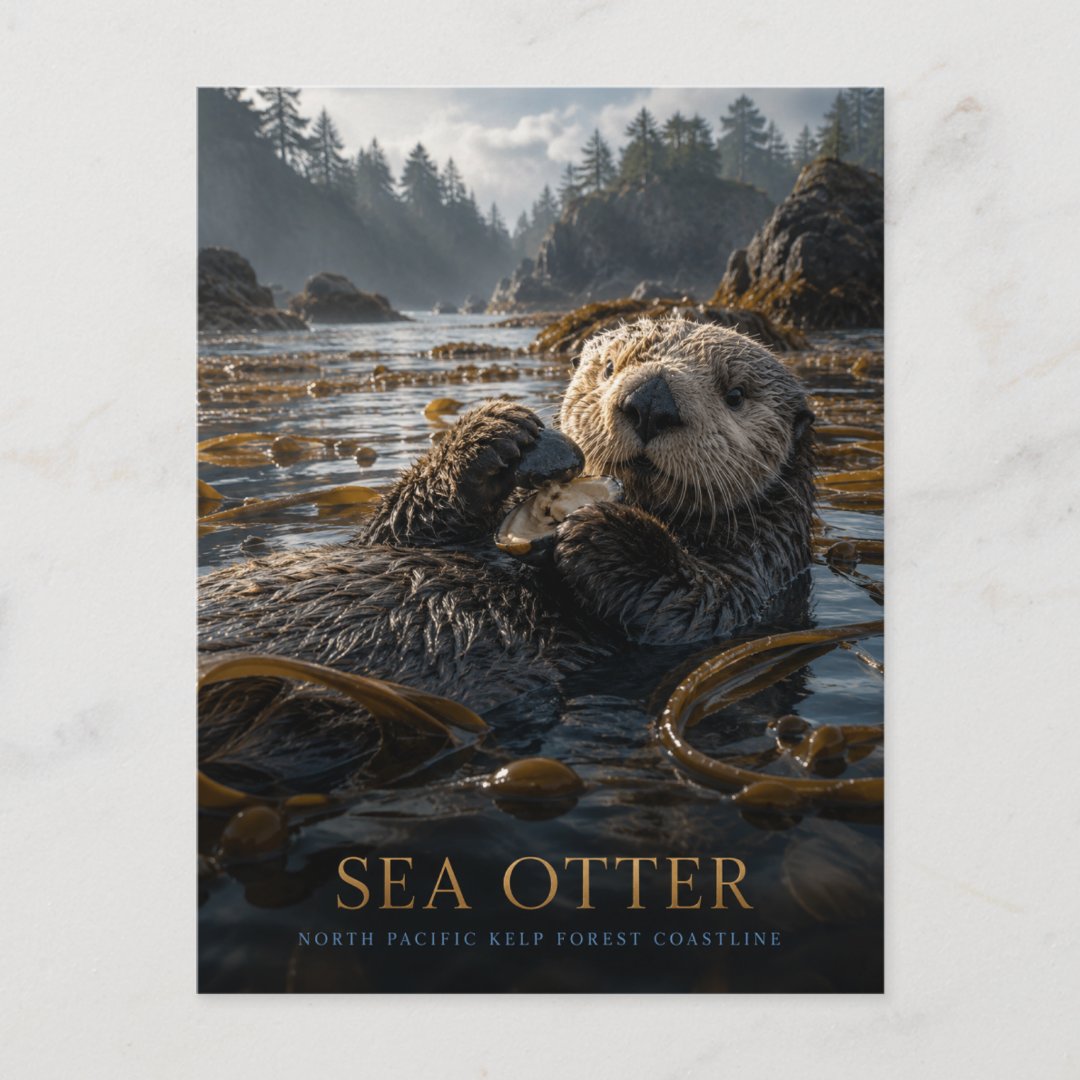
Seoul just reported something people are actually clicking: researchers counted 27 otters on the Han River, nearly double what a 2022 survey found. DNA from river scat, not a cute viral clip, is what put that number on the wire. This post is what that headline is really about — what an otter comeback means in a food web — and how a river recovery story relates to (without being) the Pacific Sea Otter Kelp Forest ANIMALS Postcard.
The headline animal is not the postcard animal
The Han River animals are otters living in a major urban river system in South Korea — the kind of mid-sized fish-eating mustelids people mean when they say a river “got its otters back.” The postcard animal is Enhydra lutris, the sea otter: heaviest living member of the weasel family, a marine mammal that spends its life in cold nearshore water, not a Seoul channel. Same family lesson. Different machine. If you blur them, you will misread both the news and the reef.
River otters (and Eurasian otters on cleaned-up rivers elsewhere) reclaim corridors when water quality, prey, and bank cover allow it. Sea otters rewired North Pacific kelp forests after the fur trade nearly erased them. Celebrate the Han River count as river ecology. Use the sea otter as the Pacific case study of what happens when a mid-sized predator returns to a workplace it can actually change.
What “27 otters” actually measured
A headcount that comes from fecal DNA is not a zoo inventory. It is a survey of genetic signatures along a river’s main stem and tributaries — evidence of animals using the corridor, not a promise that every stretch is healthy. The useful public takeaway is directional: more otters than a few years ago means something in the habitat (prey, water, disturbance, connectivity) improved enough for a recovering predator to show up in the samples again.
That is why comeback stories matter beyond soft news. When a mid-sized predator returns, you should ask what food web came back with it — fish, crayfish, banks, quiet water at night — not only whether the face photographs well.
Habitat as a job site, not a backdrop
For a river otter, the job site is a linear wet corridor: pools, riffles, undercut banks, enough cover to move without becoming a road statistic. Prey is fish and invertebrates you can catch in that geometry. For a sea otter, the job site is a cold nearshore mosaic — kelp canopy, rocky reef, soft bottom — where urchins, crabs, clams, and snails are the paycheck. The ANIMALS postcard puts a sea otter in kelp because that is a real Pacific workplace, not because green water looks pretty behind a mascot.
Anatomy that explains the body
Sea otters do not carry a blubber tank the way many marine mammals do. They carry fur — dense enough to trap air — and a metabolism that burns hot. That is why a floating otter looks relaxed while its body is doing expensive thermal work. Forepaws are tools: rocks, prey, face. Hind feet are more flipper than walk. A river otter’s body is built for a different commute: longer land travel between water, a different dive profile, a different relationship to cold.
If you only know otters from a belly-float thumbnail, you will miss that the float is a thermal and feeding posture in a marine niche, not a personality.
River comeback vs kelp keystone
Freshwater recoveries rhyme with marine ones without being the same story. Cleaner water, fewer poisons, bank vegetation, and room to hunt matter on a river. In many North Pacific study systems, more sea otters mean fewer urchins grazing kelp to bare rock, which means more standing kelp, different fish assemblages, and a shoreline that behaves differently in weather. Kelp is nursery habitat, wave buffer, and carbon fixer while it stands. The otter is one visible hinge in that chain.
So when Seoul’s Han River number doubles, the right educational move is not to slap a kelp postcard on the headline. It is to ask: what did the river have to become for otters to leave that much DNA behind — and what does a Pacific kelp forest become when sea otters are present versus absent?
The viral float vs most of its life
Search results sell the float, the rock on the belly, the face. Most of a sea otter’s day is foraging dives, grooming the fur that is its insulation, and holding territory in water cold enough to punish a bad coat. The Han River story sells “otters are back.” Most of a river otter’s success is night movement, fish, and a corridor that is not a death trap. Both viral frames are true for a second. Neither is the job.
Range, social system, and why numbers move
Sea otter populations are patchy along the North Pacific rim; local density can transform a reef while a neighboring stretch stays otter-poor. River otter recovery on an urban river is also patchy — tributaries, bridges, and soft banks matter. A survey that finds 27 animals is a system signal, not a guarantee every mile is equal. Treat rising counts as habitat news first.
Why the body is built that way
Sea otters are built to work cold water without blubber: fur, calories, dexterous paws, and a life spent mostly wet. River otters are built to commute between water and bank, to hunt fish in channels, and to use a linear home range. When either body returns to a place that can feed it, the place starts to look different. That is the ecology under the headline.
Why the ANIMALS postcard looks the way it does
The Sea Otter Kelp Forest ANIMALS Postcard is a Pacific frame: animal in the kelp workplace, light and water as the medium of the job, not a Seoul river portrait. It exists so the educational story has one honest image of the marine keystone — while the Han River news remains a river story. Same family. Same lesson about predators and habitat. Different ocean.
See nature. Feel connection. Cherish forever.


Comments
Post a Comment