Emperor Penguins Relocate When Sea Ice Fails at Smyley Island, Why the Huddle Is Only a Sliver of the Year
Emperor Penguins Relocate When Sea Ice Fails at Smyley Island, Why the Huddle Is Only a Sliver of the Year
On Tuesday, September 9, 2026, Polar Journal reported new satellite-backed observations that emperor penguins can shift breeding sites when fast ice fails, including colonies at Smyley Island, SANAE, Mertz, and Astrid that have used icebergs, ice shelves, or new ice patches as temporary platforms after break-ups, with Smyley still visible in imagery as late as December 2025 after a likely total breeding failure in 2022. That is the ice wire. This post is what that flexibility sits on: why a colony on winter ice is only a slice of an emperor’s year, how most of the life is foraging at sea, and how to tell this species from a king or an Adélie when the ice is crowded. The Emperor Penguin Antarctic Ice ANIMALS Postcard is one wildlife frame from that ice workplace, not a satellite pixel.
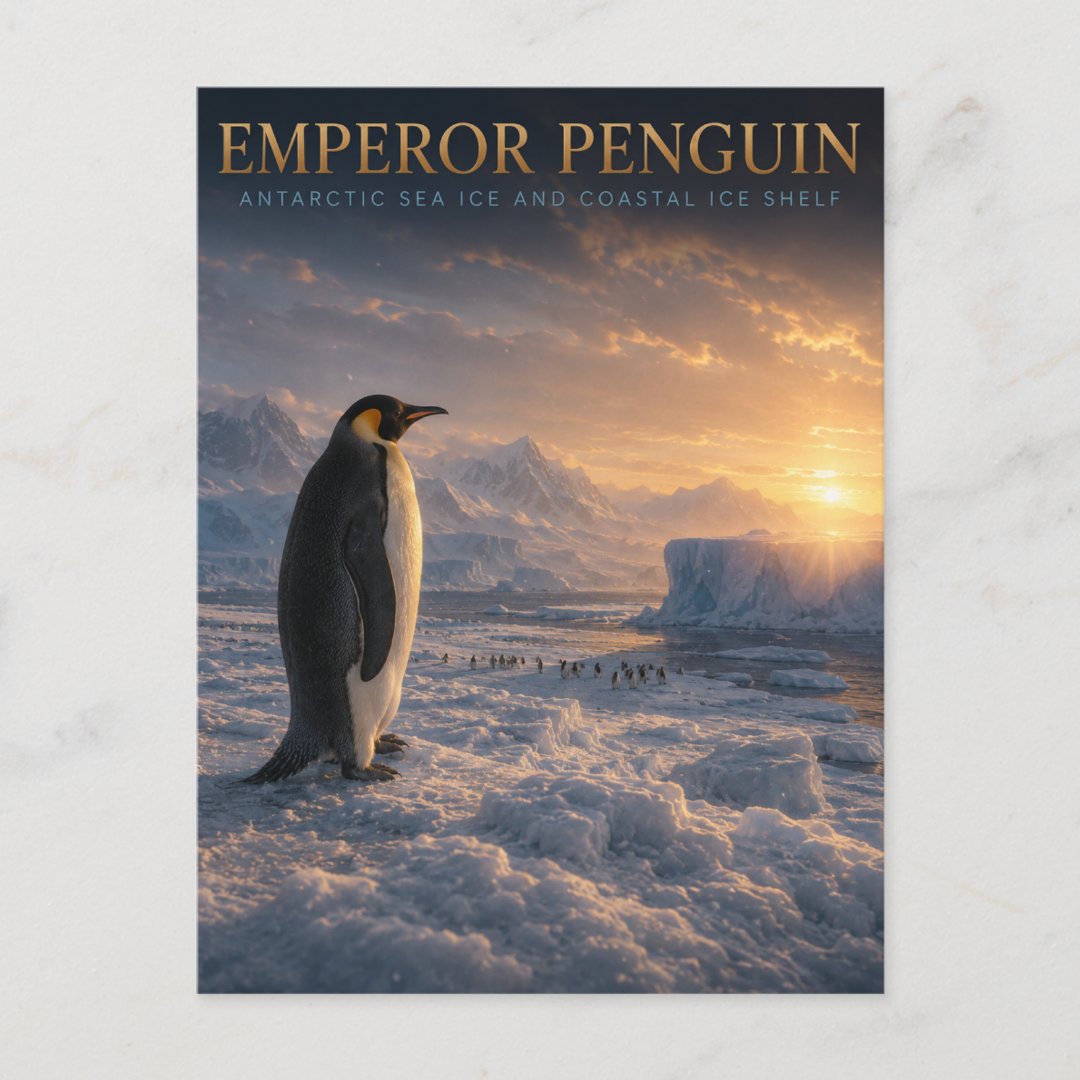
The emperor is not every tuxedo on the ice
The emperor penguin is Aptenodytes forsteri, the tall Antarctic breeder that incubates through polar night on sea ice. King penguins are the lookalike cousins of sub-Antarctic islands with brighter ear patches and a different calendar. Adélies and chinstraps are smaller brush-stroke birds of rock colonies. Same “penguin” meme. Different job sites. Smyley’s story is emperor logistics: when the nursery floor breaks, some colonies move the nursery.
Ice is a job site that can relocate
Emperors need stable enough fast ice for eggs and chicks, then open water for the commute. Soft ice habitat is a platform that lasts the breeding gamble. Hard ice failure is a break-up that dumps a season, as Smyley likely saw in 2022. The new satellite read is not a fairy tale of endless adaptation. It is evidence that some colonies can re-site on bergs and shelves when the old floor disappears, with limits if sea ice keeps retreating.
How to tell emperors from lookalikes
Size and neck. Emperors are the tall ones with pale yellow neck patches and a black head that meets white belly in a clean curve. Kings flash brighter orange ear patches and often stand on ice-free islands. If the clip is only a huddle from altitude, wait for a better angle.
Place. Continental Antarctica and fast-ice colonies: emperor. Sub-Antarctic island beaches: often king. Smyley, Dawson Lambton Glacier imagery, Polar Journal: emperor ice politics.
The viral huddle versus most of the year
Search sells the huddle and the egg on feet. That is real, and it is a sliver. Most of an emperor’s year is foraging at sea. Colony relocation news is the public version of that fuller commute: ice as furniture that sometimes has to be moved.
Why the ANIMALS postcard looks the way it does
The Emperor Penguin Antarctic Ice ANIMALS Postcard is built from emperor natural history, not a Smyley satellite diagram. One adult in profile on textured ice is a working second between colony and water. Keep the Polar Journal flexibility news in the caption. Keep the ice frame honest.
Wild Realms makes cinematic wildlife art from the living world. See nature. Feel connection. Cherish forever.
The postcard: Emperor Penguin Antarctic Ice ANIMALS Postcard
More penguin wildlife: Penguin collection


Comments
Post a Comment