Grand Teton Euthanizes Food-Conditioned Black Bear — Why Brown Bears Still Live as River Foragers
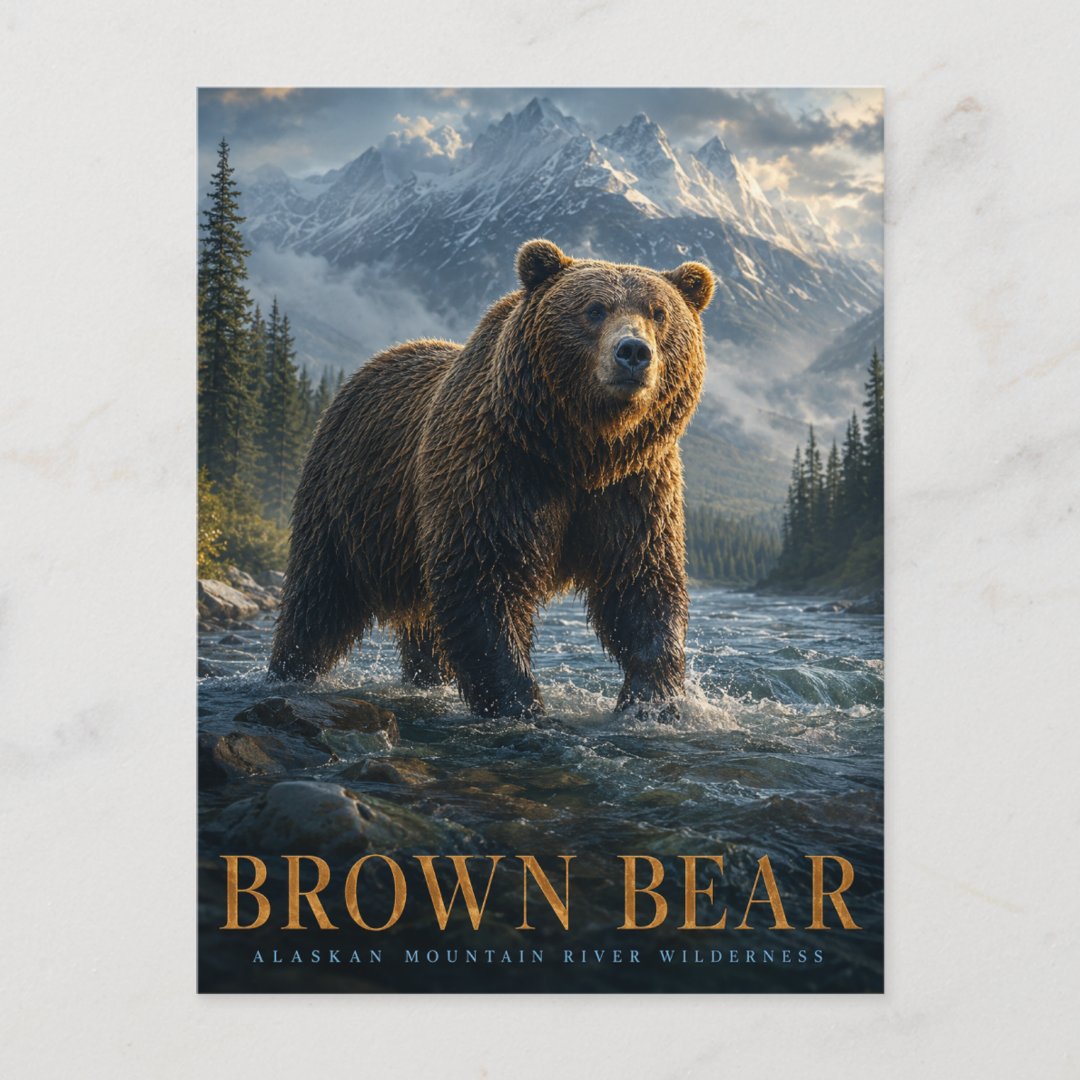
On coverage published Wednesday, September 17, 2026, in the Jackson Hole News&Guide, environmental reporter Christina MacIntosh walked how Grand Teton National Park wildlife managers euthanized a roughly 5-year-old female black bear at Delta Lake after days of human-food rewards — visitors dropping packs, unattended lakeshore gear, and a bear that grew bold enough that staff called the risk unacceptable, with the carcass flown out the next morning because of trail traffic. That is the bear wire. This post is what that headline sits on: how brown bears actually live as river and forage animals, why a big body at a salmon run is a seasonal commute and not a lone “king,” and which viral “aggressive giant” rumors fail the field. The Brown Bear Alaskan River ANIMALS Postcard is one wildlife frame from that story, not a conflict chart.
The brown bear is a seasonal forager, not a lone monument
The brown bear is Ursus arctos: a huge-bodied omnivore whose year is a calendar of berries, roots, carrion, fish runs, and the fat it must bank before denning. Coastal and Alaskan river bears lean hard into salmon when the water delivers. Interior bears lean harder into plant and insect forage. Most of what people call a “king of the river” in pop wildlife is a tourist silhouette at a falls. Tenure is earned by finding enough calories across seasons, teaching cubs what a lean berry year costs, and avoiding constant collision with people and livestock at the edge — not by a cartoon charge for its own sake.
People mash “big brown mammal at water” into one sticker. A coastal brown bear on an Alaskan river and a black bear on a Rocky Mountain trail are related. They are not interchangeable commute maps. The postcard is a river frame: cold water, wet fur, a body built for power in current and long seasons of feast and scarcity — not a lonely statue for drama.
River and range are a job site of calories and memory
A brown bear's workplace is food a body can find across months: spring greens, summer berries, fall fish and mast, carcasses when luck allows, and the dens and travel routes an older animal has used before. Useful habitat is forage plus cover plus room to move without constant food-conditioning at the trailhead.
A soft edge is wildland with depth and connected corridors. A hard edge is picnic leftovers, open coolers, and packs left on a lakeshore for a photo. The postcard's river is the soft-edge ideal against which a food-trained trail reads like a hard commute, not a morality play.
How a brown bear year actually works
Bears travel, dig, fish, rest, and teach by scent, strength, and patience — not by a Hollywood roar-on-command. Cubs learn the job by staying close. Adults have their own seasonal politics around rich patches. Claws and jaws are tools: dig, strip, catch, defend a carcass. Most hours of a bear year are still walking, foraging, failed routes around people, and the quiet work of who reaches the run first.
Conservation headlines often arrive as conflict numbers or management killings. The body on the postcard is older than the press cycle: mass for cold water, a coat for weather, a hunger tuned to a landscape that must be tasted and remembered.
How to tell bear facts from viral megafauna lore
Species are not interchangeable. Brown bear, American black bear, and polar bear share a family tree. Head shape, size, habitat, and diet packages differ. Viral “bear at the campsite” photos still need species and context before you caption a continent.
Food-conditioning is learned behavior, not mysticism. Bears remember calories. A week of unattended packs makes boldness look like destiny. It is reinforcement, not a soundtrack cue.
A river run is not a permanent address. Salmon and berry seasons move. Plenty of classic “falls bear” images are a short chapter of a longer year.
Why that body exists
A wolf voted for cooperative chase. An eagle voted for high patrol and a different commute. A brown bear voted for omnivore endurance: dig, fish, bank fat, den through scarcity. That is why a bear on an Alaskan river and a brown bear on a wildlife postcard share one job description under different weather.
Why the ANIMALS postcard looks the way it does
The Brown Bear Alaskan River ANIMALS Postcard is built from brown bear natural history, not a citation ledger and not a generic “big wildlife” template. The bear stands in river light because that is the job: cold water, wet air, distance, a body tuned to forage seasons and current. A cinematic still is presence and habitat, not a crisis freeze for its own sake.
If the story needs the park beside the wildlife frame, Supreme Customs keeps Grand Teton destination cards — the live place grid sits under the bear collection close.
Wild Realms makes cinematic wildlife art from the living world. See nature. Feel connection. Cherish forever.
The postcard: Brown Bear Alaskan River ANIMALS Postcard
More bear wildlife: Bear collection


Comments
Post a Comment