Jakob the Koala Is on the Mend in Ballarat, Why Exhausted Koalas End Up Under Trees
Jakob the Koala Is on the Mend in Ballarat, Why Exhausted Koalas End Up Under Trees
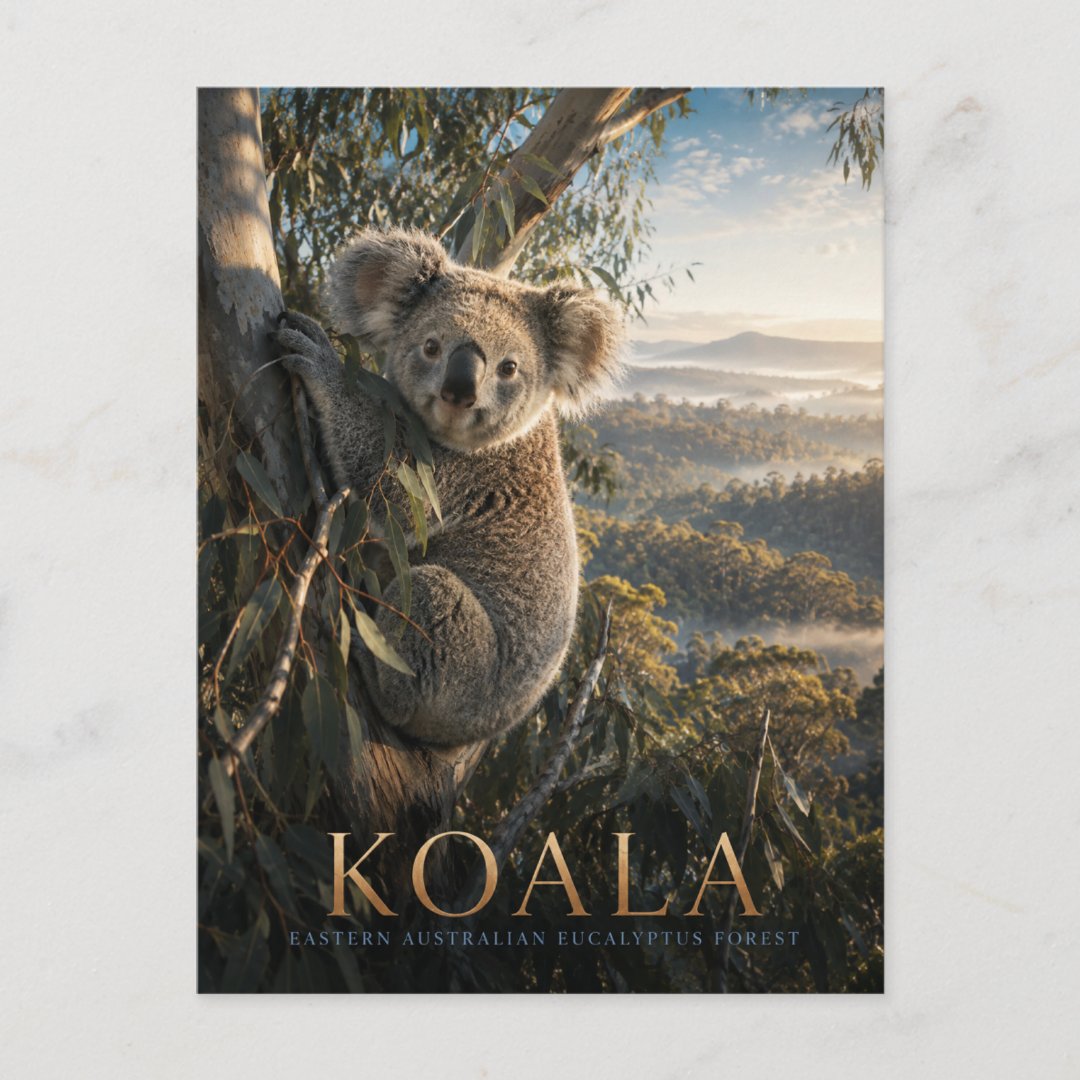
On Monday, September 7, 2026, Ballarat Wildlife Hospital reported that Jakob, a koala rescued last month from under a tree in the Mollongghip area after an abnormal sit-and-wait spell, is recovering after two days on an intravenous drip and is being readied for release when the weather breaks — part of a busy winter that sent more koalas to care than the same stretch last year. That is the local wire. This post is what that rescue sits on: why koalas sleep so much, how eucalyptus poison and nutrition actually work, what “sitting still in daylight” signals, and how to tell a healthy rest from a crisis. The Koala Eucalyptus Forest ANIMALS Postcard is one wildlife frame from that story, not the hospital chart.
The koala is not a bear, and the nap is not laziness
The koala is Phascolarctos cinereus, an arboreal marsupial of eastern Australia, not a bear despite the nickname. People treat “koala” as a sleepy plush. It is not. It is a specialist folivore whose low-energy diet of eucalyptus leaves forces a slow daily clock — often around 18 to 22 hours of rest — because detoxifying and digesting those leaves is expensive work.
Adults are stocky, with a large nose, strong limbs, and two thumbs on the front paws for climbing. Males are larger; both sexes can look round in a fork of a tree. When rescuers say a koala was found sitting under a tree in an abnormal spot, as with Jakob near Mollongghip, they are flagging behavior and place, not a cute photo op. Healthy koalas are mostly nocturnal and crepuscular. A still animal in the open at midday can be ordinary rest high in a preferred tree — or a sick, exhausted, or displaced animal that needs the drip Jakob got.
Eucalyptus forest is a chemistry lab, not a postcard grove
Koalas do not eat “trees.” They eat particular eucalyptus species and even particular trees within a stand, choosing leaves that balance toxins and nutrients. The gut is a fermentation system. The liver handles secondary compounds. Energy return is poor compared with fruit or meat, which is why the sleep budget looks absurd until you see it as metabolic accounting.
Habitat is woodland and forest with the right browse, connectivity between patches, and enough height to rest and escape dogs and cars. A pretty eucalyptus postcard with no preferred leaf chemistry is a closed kitchen. Heat waves, habitat fragmentation, and chlamydia disease load are why wildlife hospitals in Victoria see seasonal spikes — the busy winter Ballarat described is that pressure with a name and a drip line attached.
Hands, gut, and why the fork of a tree is furniture
The climbing kit is obvious: claws, grip, a body that wedges into forks. The feeding kit is quieter: a narrow diet, a lot of chewing, a lot of sitting while the gut works. Koalas get most of their water from leaves, which is why drought and heat hit hard. A dehydrated koala looks “quiet” until it is under a tree in the wrong place.
Nikki Shanahan’s public guidance from Ballarat matches the biology: watch for animals that stay put, look thin, sit on the ground, or appear in odd locations; koalas are most active at night and in the early morning. Jakob’s story is the educational case: abnormal sit, rescue, IV fluids, recovery toward release when weather allows. The postcard still shows the healthy job site — high in eucalyptus — so readers can tell the difference between the viral nap and the hospital nap.
How to tell a healthy koala rest from trouble
Height and place. Resting in a preferred tree fork can be normal. Sitting on the ground under a tree in an unusual area, like the Mollongghip find, is a reason to call local wildlife rescue, not to approach for a selfie.
Time of day. Daytime stillness high up is often ordinary. Daytime stillness in the open, repeated across days, or paired with scorching heat, is different.
Body condition. A round healthy coat versus a gaunt, wet, or injured animal. You will not diagnose chlamydia from a phone photo. You can notice “this does not look right” and phone the experts.
Not a bear. Drop bears are a joke. Koalas are marsupials. Wombats are the ground cousins people confuse in souvenir shops. If it has a big spoon nose and eucalyptus breath, you are in koala country.
The viral nap versus most of the life
The image that travels is a koala asleep in a fork, or a joey on a chest. That is real, and it is a sliver. Most of the biological story is leaf choice, gut time, night movement between trees, and the disease and car risks that fill hospital wards. Jakob’s drip is the un-cute half of the same species people put on tea towels.
Joeys spend months in the pouch, then on the back, learning which trees matter. Males bellow in the breeding season. Home ranges overlap in messy ways. A single viral nap does not teach any of that — and neither does a rescue headline unless someone explains the eucalyptus math underneath.
Movement, range, and why weather gates a release
Koalas move between trees more than the nap myth suggests, especially at night. Fragmented habitat turns every ground crossing into a dog-and-car problem. Ballarat’s “release when weather breaks” line is practical: a recovering animal needs browse and conditions that will not dump it straight back into care.
That is why a still koala in eucalyptus light is not a small subject. The fork is a workstation in a chemical forest. The hospital is the backup system when the workstation fails.
Why that body exists
A possum voted for a wider menu. A wombat voted for burrows and grass. A koala voted for height, grip, and a liver-and-gut partnership with toxic leaves. The sleep is the bill for that vote. Cute is a side effect. Exhaustion under a Mollongghip tree is what the bill looks like when habitat, weather, or health tips the ledger.
Why the ANIMALS postcard looks the way it does
The Koala Eucalyptus Forest ANIMALS Postcard is built from that natural history, not from a generic “sleepy bear” template. The koala sits in eucalyptus because that is the job site and the pantry. Soft daylight through leaves is the resting hours between night feeds. The type says KOALA and EUCALYPTUS FOREST because that is the species and the chemistry. Wildlife first. Place as the medium it lives in.
That frame is the healthy map behind Jakob’s recovery story: the tree a koala is built for, so the hospital headline has somewhere educational to land.
Wild Realms makes cinematic wildlife art from the living world. See nature. Feel connection. Cherish forever.
The postcard: Koala Eucalyptus Forest ANIMALS Postcard
More koala wildlife: Koala collection


Comments
Post a Comment