Kothamangalam Elephant Calf Dies After a Herd Brings Down a Power Line, Why African Elephants Still Need Soft Edges
Kothamangalam Elephant Calf Dies After a Herd Brings Down a Power Line, Why African Elephants Still Need Soft Edges
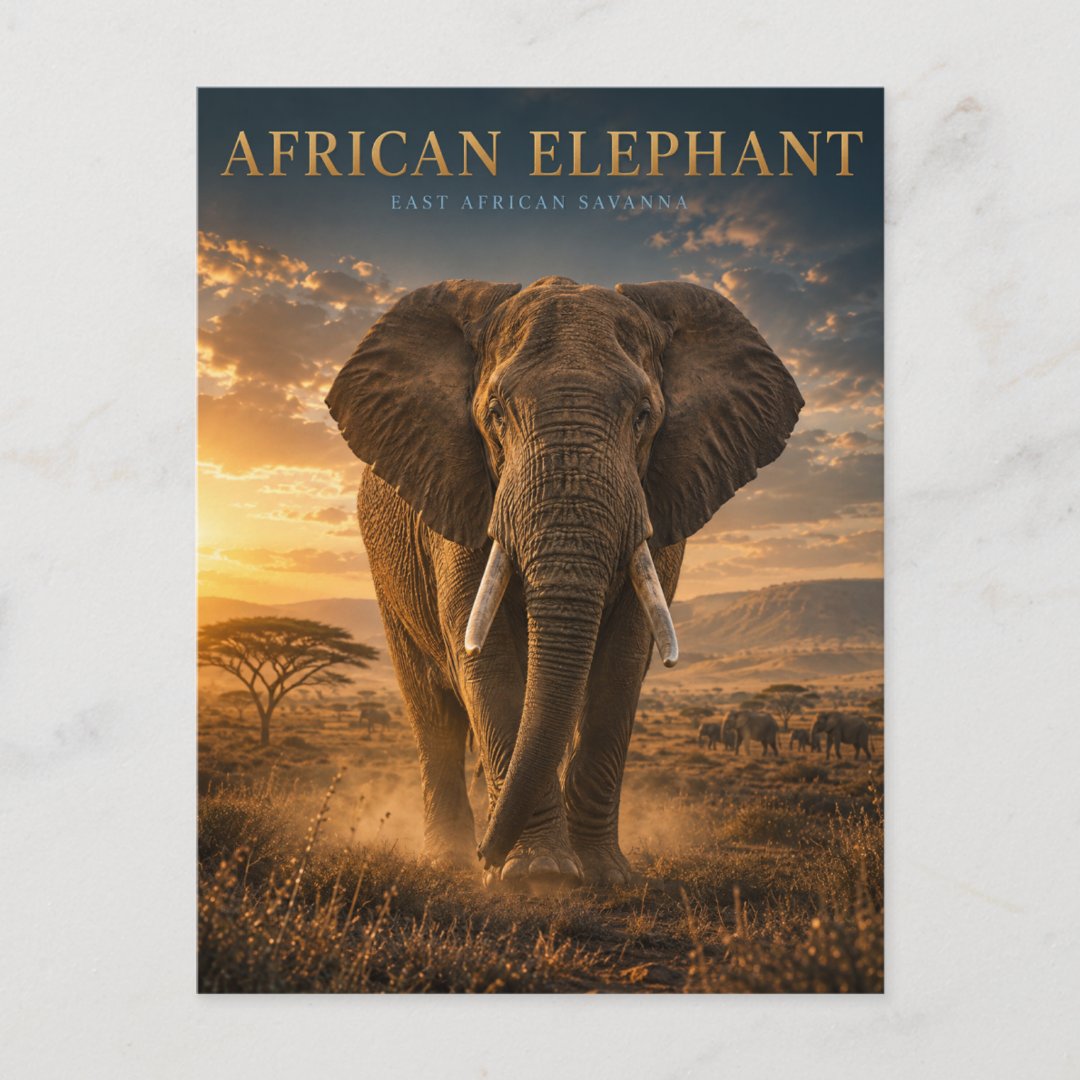
On coverage published Tuesday, September 9, 2026, in Onmanorama, a wild elephant calf about six to eight months old died after electrocution in a rubber plantation at Vadakkumbhagam in Kottappady near Kothamangalam, Kerala, after its herd knocked a rubber tree onto an overhead power line and the current found the young animal on the forest fringe. That is the wire: human–wildlife conflict where plantation, wire, and Asian elephant path share the same edge. This post is what that headline sits on for a reader who mostly sees “elephants” as one gray logo: how African bush elephants actually live, feed, and reshape a savanna, why soft habitat edges matter on either continent, and how electrocution risk is a conflict symptom rather than a random tragedy. The African Elephant Savanna ANIMALS Postcard is one wildlife frame from that story, not a Kerala plantation brief.
The African elephant is not every elephant on the planet
The African bush elephant is Loxodonta africana, the big open-country and woodland giant of sub-Saharan Africa: larger ears that map roughly like the continent, both sexes often with visible tusks, a head that looks as if it carries a single high dome in profile compared with the twin-domed Asian skull. The Asian elephant is Elephas maximus, the forest and mosaic giant of South and Southeast Asia, including the Western Ghats and Kerala herds that move through rubber and fringe farms around Kothamangalam. Same order, Proboscidea. Different genus. Different job.
People mash them into one “elephant” meme. That is how a Kottappady electrocution and a Serengeti dust-bath photo get treated as interchangeable stickers. They are not. The calf near Kothamangalam is Asian, in a plantation-and-wire landscape. The postcard is an African savanna frame: ears, tusks, and light that belong to African bush elephant country. Same hygiene as telling a sea otter from a river otter before you share a headline.
Soft edges are job sites, not optional scenery
An elephant’s workplace is browse and graze within reach of water, shade, and a path memory that older females hold. Useful habitat is food plus room to move without hitting lethal infrastructure. A soft edge is a buffer where farms, plantations, and power lines do not sit flush against the corridor. A hard edge is wire at head height, rubber trees under conductors, and a calf that cannot read voltage.
The Onmanorama story is a hard-edge story: herd knocks a rubber tree onto an overhead line; the current finds the youngest body. African bush elephants meet the same physics on a different map: fencing, transformers, railway corridors, and waterhole politics. Soft edges are not charity language. They are how a six-ton commute stops being a death lottery. The postcard’s open savanna is the soft-edge ideal: room, dust, and light without a conductor in the canopy.
Asian versus African: same order, different job notes
Ears. African bush elephants have large ears shaped roughly like Africa. Asian elephants have smaller, more rounded ears. In a clear photo, ears are one of the fastest tells.
Head and back. Asian elephants show a twin-domed head and a back line that often looks more arched. African bush elephants look “higher at the shoulder” in many classic plains photos, with a single high forehead profile.
Tusks. In African bush elephants, both males and females commonly carry tusks (with local exceptions). In Asian elephants, heavy tusks are mostly a male story; many females have small tusks (tushes) or none visible. A Kerala calf under a plantation line is not the same visual as a big-tusked African matriarch in dust.
Trunk tip. African elephants have two “fingers” at the trunk tip. Asian elephants have one. That detail is hard in a night plantation still and easy in a postcard close look.
Place and conflict. Asian: Western Ghats, Kerala rubber and farm fringe, train and fence and power-line politics. African: savanna, woodland, floodplain, ivory and fencing and waterhole politics. Same intelligence and social depth. Different maps. Same need for soft edges.
Herds, calves, and why the path is a property line
African bush elephants live in fission-fusion societies around related females. Males leave and form loose associations. Infrasound and scent carry farther than a tourist can hear. Calves stay close; the first years are apprenticeship on the route map. When a herd moves through dense plantation fringe, the calf is the body most likely to touch what the adults’ bulk displaces — a downed tree, a live wire, a fence that looks like browse.
Asian herds in Kerala run the same social software against rubber, roads, and overhead lines. Kothamangalam’s fringe is politics: who owns the corridor, which conductor sits over a rubber row, which night the herd pushes a tree. African conservation fights the same edge problem at landscape scale. Both are about keeping the path alive for the youngest animals first.
How to tell an African bush elephant from an Asian elephant
Ears and head first. Big Africa-shaped ears and a single high forehead profile: African bush. Smaller ears and twin domes: Asian. If the clip is only a gray shoulder in plantation dark, wait for a better angle before you caption a continent.
Tusks and age. A six-to-eight-month calf will not carry the ivory story adults do. Do not invent a “bull” from a night still. Species ID still starts with ears, head, and place.
News hygiene. Kothamangalam, Kottappady, Vadakkumbhagam, rubber plantation, Onmanorama: Asian elephant. African savanna postcard and Serengeti-style dust: African bush elephant. Same awe. Different caption. Soft edges are the shared lesson.
The viral tragedy versus most of the year
Search results sell the charge, the trumpet, the calf under the belly, and now the electrocution still. That is real, and it is a sliver. Most of an elephant’s year is walking, feeding, touching, and teaching calves the map. Matriarchs hold decades of route memory. Musth is a season, not a permanent mood.
Conflict news sells the wire and the grief. Most elephant hours after a hard-edge death are still the quiet bulk feeding that put the herd in the plantation. Hold both truths so neither continent becomes one cartoon: the African postcard is a soft-edge workplace; the Kerala calf is what happens when the edge goes hard.
Why that body exists
A rhino voted for bulk and a different face. A hippo voted for water and night grazing. An African bush elephant voted for height, trunk reach, ear radiators, and tusks as landscape tools in open and semi-open country. An Asian elephant voted for a twin-domed skull and a body tuned to forest mosaic and farm-edge corridors. That is why a calf under a Kerala power line and a tusked bull in African dust are related giants, and why calling them the same sticker erases the soft-edge lesson the postcard is meant to hold.
Why the ANIMALS postcard looks the way it does
The African Elephant Savanna ANIMALS Postcard is built from African bush natural history, not a Kerala plantation diagram and not a generic “gray giant” template. The elephant stands in savanna light because that is the African job: ears as flags, dust as medium, a body that edits trees and grass when the edge is soft enough to live in. A cinematic still is scale, not a charge freeze for its own sake.
The type on the card says AFRICAN ELEPHANT and SAVANNA because that is the species and the job site. Wildlife first. Place as the medium it lives in. That is the ANIMALS line: a cinematic still meant to be kept, not a stack of SKUs. Keep the Kothamangalam Asian electrocution news in the caption where it belongs. Keep the savanna frame honest about which elephant job it shows, and why soft edges still matter for both.
Wild Realms makes cinematic wildlife art from the living world. See nature. Feel connection. Cherish forever.
The postcard: African Elephant Savanna ANIMALS Postcard
More elephant wildlife: Elephant collection


Comments
Post a Comment