Sumatran Elephant Habitat Burns as Fires Spread — Why African Elephants Still Live as Matriarch Families
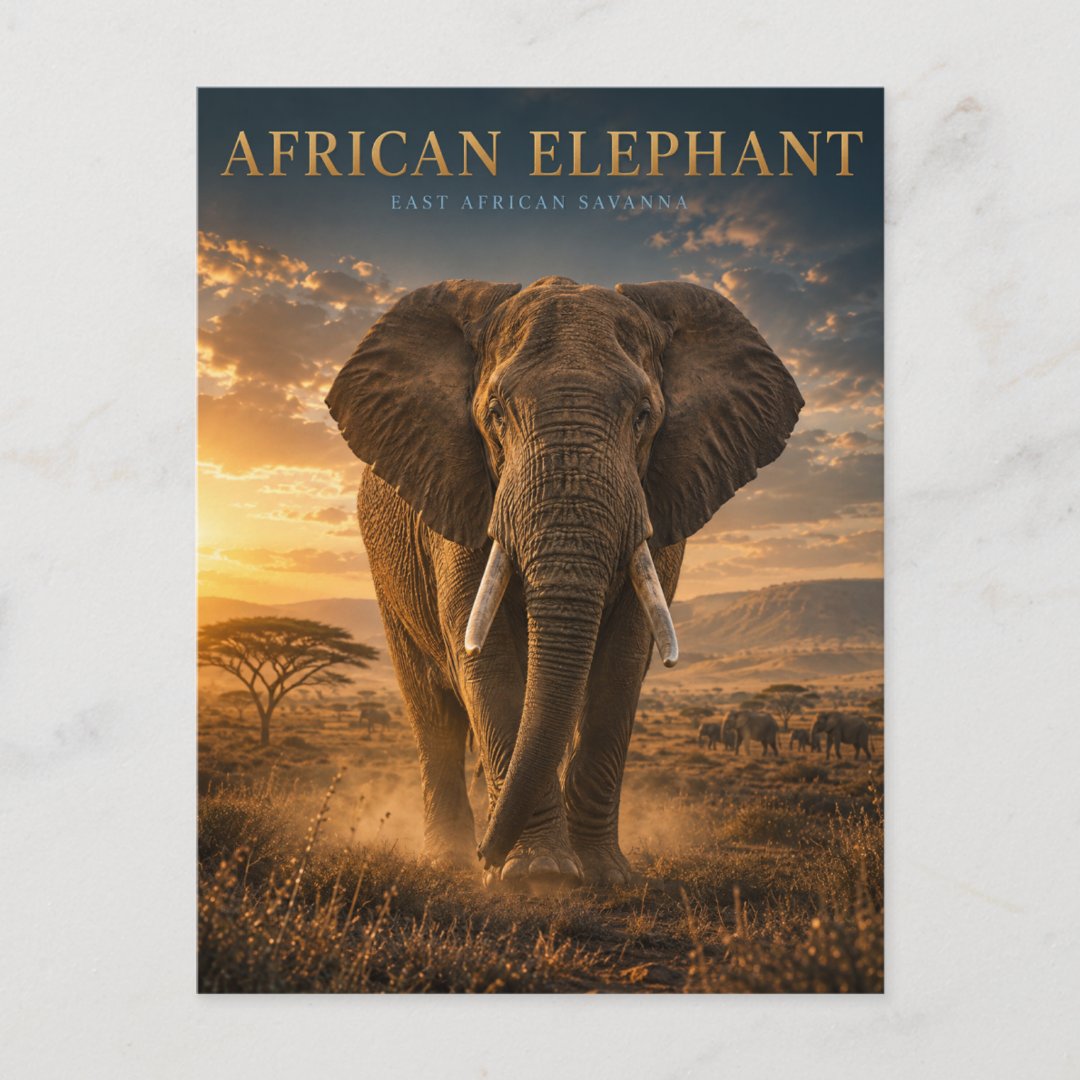
On coverage published Tuesday, September 16, 2026, in The Straits Times, a Geopix report put numbers on wildfires chewing through Sumatran elephant habitat — roughly 382,778 hectares affected in August and another 147,550 hectares in the first week of September across 21 population pockets, with hotspots jumping from 74 in June to 2,851 early in the month, while only about 1,320–1,635 Sumatran elephants are estimated to remain in the wild. That is the elephant wire. This post is what that headline sits on: how African elephants actually live and travel as matriarch families, why a herd is a memory map and not a lone giant, and which rumors about “aggressive kings” and water-hole myths fail the field. The African Elephant Savanna ANIMALS Postcard is one wildlife frame from that story, not a fire map.
The African elephant is a matriarch family, not a lone monument
The African elephant is Loxodonta africana (savanna) and its forest cousin Loxodonta cyclotis: huge-bodied browsers and grazers whose usual social unit is related females and their calves, led by an older cow who remembers water, forage, and routes. Bulls leave or orbit. Most of what people call a “king of the plains” in pop wildlife is a tourist silhouette. Tenure is earned by staying together, finding enough browse and grass, and teaching calves what a dry season costs — not by a cartoon charge for its own sake.
People mash “big gray animal with a trunk” into one sticker. A savanna elephant on Acacia country and a forest elephant in Central African canopy are related. They are not interchangeable commute maps. The postcard is a savanna frame: warm light, open range, a body built for long travel, dust, and cooperative care — not a lonely statue for drama.
Savanna is a job site of forage, water, and memory
An elephant's workplace is food a family can find across seasons: grasses when rains allow, browse and bark when the ground hardens, mineral licks, mud for cooling and parasites, and the water points an older female has walked before. Useful habitat is forage plus water plus room to move without constant fence and crop collision at the edge.
A soft edge is public wildland with depth and connected corridors. A hard edge is plantations and villages flush against a night map of ripe crops. The postcard's savanna is the soft-edge ideal against which fragmented country looks like a hard commute, not a morality play.
How a herd actually works
Elephants travel, feed, rest, and reunite by scent, low-frequency rumble, and touch — not by a Hollywood stampede-on-command. Calves learn the job by staying close. Musth bulls have their own seasonal politics. Trunks are tools: smell, drink, dust, greet, strip bark. Most hours of an elephant year are still walking, feeding, failed routes around fences, and the quiet work of who leads to water first.
Conservation headlines often arrive as conflict numbers or habitat loss. The body on the postcard is older than the press cycle: pillars for distance, ears for heat, a trunk for a landscape that must be tasted and remembered.
How to tell elephant facts from viral megafauna lore
Herds are families. Related females and young, with a matriarch who holds routes in memory. “Alpha charge” as a dominance tournament among strangers is tourist caption leftovers, not the usual wild org chart.
Memory is navigation, not mysticism. Elephants remember water and kin. Drought years make that memory look like prophecy. It is experience, not a soundtrack cue.
An Asian elephant is not a small African elephant. Head shape, ear size, and tusking patterns differ. Viral “elephant in the suburbs” photos still need species and context before you caption a continent.
Why that body exists
A giraffe voted for high browse and a different social map. A rhino voted for bulk and a shorter commute. An African elephant voted for cooperative endurance: long travel, seasonal forage, a social map that can hold a valley across dry months. That is why a family on a dust trail and an elephant on a savanna postcard share one job description under different weather.
Why the ANIMALS postcard looks the way it does
The African Elephant Savanna ANIMALS Postcard is built from African elephant natural history, not a hotspot diagram and not a generic “big wildlife” template. The elephant stands in savanna light because that is the job: open country, warm air, distance, a body tuned to family space and forage country. A cinematic still is presence and habitat, not a crisis freeze for its own sake.
Wild Realms makes cinematic wildlife art from the living world. See nature. Feel connection. Cherish forever.
The postcard: African Elephant Savanna ANIMALS Postcard
More elephant wildlife: Elephant collection


Comments
Post a Comment